Japanese Onsen Etiquette in Japan: A First-Timer's Step-by-Step Guide
We earn a commission when you book through our links on Viator (PID P00299531), at no extra cost to you. This is how we keep the site free. Learn more →
What shapes a visit to Japan
Japanese onsen etiquette comes down to a short sequence: wash before you soak, keep your towel out of the water, stay quiet, and never photograph the bathing area. The JNTO onsen etiquette guide covers the same ground and is worth reading on the train.
October 2023 in Kinosaki Onsen, Hyogo, is the trip that showed me how much of onsen culture happens outside the water. I checked into the ryokan in the afternoon, changed into the provided yukata, and walked straight out into the street. Couples, families and groups of friends were all shuffling between the public baths in wooden geta, and the clicking of geta on pavement became the town's soundtrack for me. The fifth bath was empty by the time I reached it, and the seventh, Satono-yu, had a rotemburo with steam drifting up into the autumn night sky.
Yukata (light cotton kimono) is provided at ryokan for wearing around the property. Wrap it left side over right, because right over left is for funerals. In Kinosaki, wear the yukata to dinner and between baths as well, since the whole town runs on yukata culture and street clothes stand out more than traditional dress. A ryokan (a traditional inn, with shared or private baths) sets the tone for your whole stay, so compare options on the Japan Onsen official cultural tourism site before committing.
Skip this format if you already move through a washing station without thinking and want a rotemburo (outdoor bath) at dusk with nobody explaining anything.
Authentic Onsen Experience Tattoo Friendly Lesser-known spot in Shinjuku: what the itinerary covers
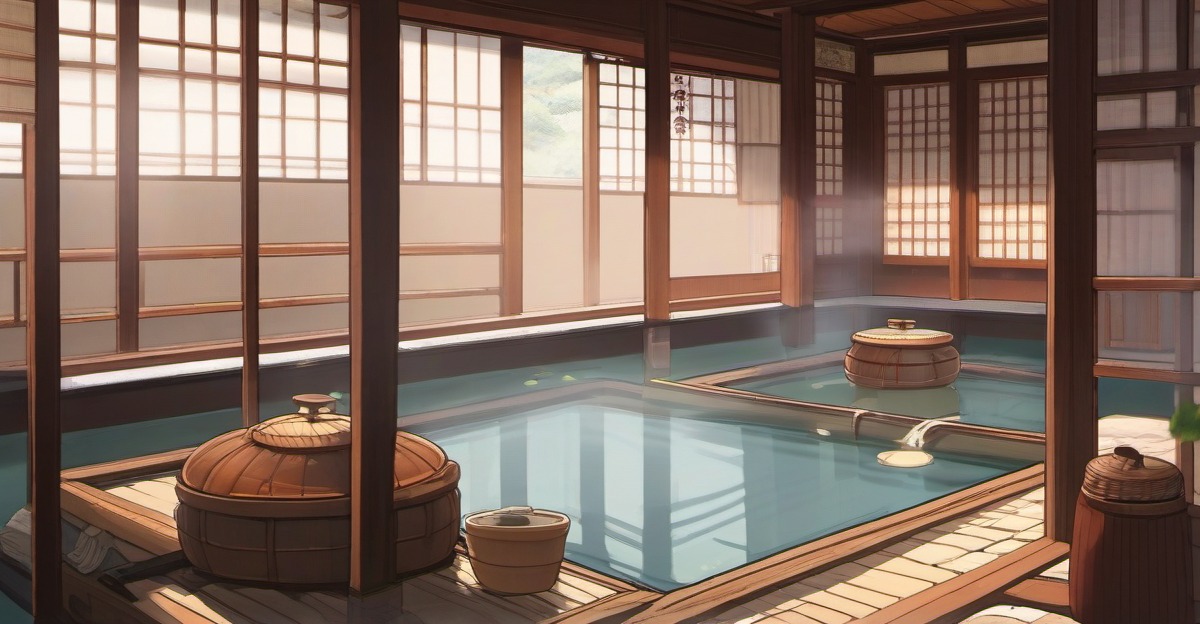
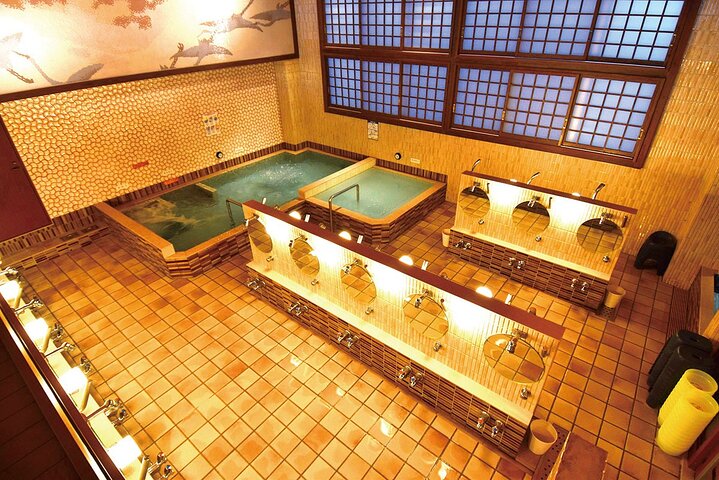
A sento is a neighbourhood public bathhouse, and this session pairs one with a local guide who teaches bathing etiquette in the moment.
The listing calls itself tattoo friendly. Even so, read the card and confirm the policy directly before booking. Choose this session if you'd like to ask questions out loud.
Authentic Onsen Experience Tattoo Friendly Hidden Gem in Shinjuku
From $35 · Price checked: Sep 2026
Best for: First-time onsen visitors learning etiquette
Not for: Travelers uneasy about communal nude bathing or seeking a private bath
Guided sento experience in Shinjuku. Learn bathing etiquette from a local guide.
Check availabilityExternal booking on Viator · pricing and cancellations handled by Viator
Planning onsen in Japan
The moments that made the trip were the ones where onsen culture was doing real work: water being cooled, food being cooked, a whole town moving between baths.
Kusatsu Onsen in Gunma, February 2024, taught me that the hard way. The yumomi performance was listed in every guidebook, so I assumed it would be touristy and skipped it on my first day. On the second day I wandered in late and found women in traditional dress singing a work song in the local dialect while churning scalding water with long wooden paddles. The room was a working hot spring hall, and steam filled it so thickly my glasses fogged instantly. By the end the water was cool enough to touch, and I realised the four hundred year old technique was not a performance at all but something still plainly necessary.
If you go, watch it early in your stay and arrive ahead of time for a seat near the front, where the steam hits hardest.
Snow plus an outdoor rotemburo is the classic onsen experience. In winter, bring a warm hat for the walk between the indoor and outdoor baths, and check the Japan Meteorological Corporation for snow forecasts and seasonal conditions before you set off.
Tokyo: Tattoo friendly Onsen (Sento, public Bath) Experience: who this tour suits
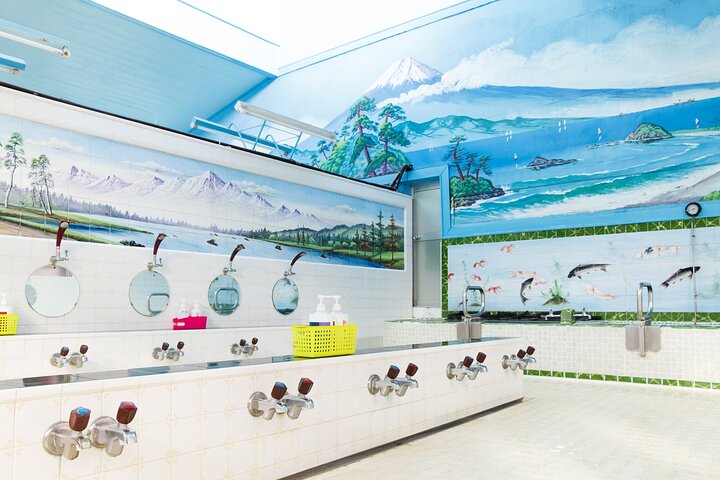
This classic sento in Asakusa is the budget-friendly partner to the Shinjuku session: small, local and plain, the way a neighbourhood bathhouse is meant to be. I like it for travelers who want sento culture itself, with its washing stools and regulars, before they spend money on a ryokan night. Some sento in Tokyo are tattoo-friendly even where ryokan in the same area are not, which can make a sento the easier first step for inked travelers.
Book the Shinjuku session instead when having a guide explain each step matters more to you than keeping costs down.
Tokyo: Tattoo friendly Onsen (Sento, public Bath) Experience
From $12 · Price checked: Sep 2026
Best for: Budget travelers and sento culture enthusiasts
Not for: Seasoned bathers who already know sento etiquette and want no guidance
Classic sento in Asakusa. Small, local, genuine. Good for budget-conscious travelers.
Check availabilityExternal booking on Viator · pricing and cancellations handled by Viator
What Surprised Me About Japan
What surprised me was how far onsen culture reaches beyond the bath. In some onsen towns, steam and hot water shape daily life, and the care you learn at a washing station carries into the streets, shops and ryokan corridors.
That hit me on an ordinary walk in the Kannawa district of Beppu in March 2023. Walking through Kannawa, I noticed steam rising from grates in the pavement every few dozen paces. A local man was lowering a metal basket of corn and eggs into one grate on a rope, and when he saw me watching he grinned and said, "Jigoku-mushi, hell steamed." I bought onsen tamago from a nearby shop and sat on a low wall eating eggs cooked by the same thermal heat that powers the entire city.
If you want to try jigoku-mushi cooking, buy eggs and vegetables at a supermarket, then ask a local or copy whoever used the vent before you, because cooking times vary.
Talking loudly in onsen is considered rude. Most onsen prohibit photography inside bathing areas. Leave your phone in the locker, and bring coins for the coin lockers at the entrance.
Choose a private bath if shared silence and communal nudity sound more stressful than restful. Our guide to private onsen in Tokyo covers that option.
Planning the visit well
Getting onsen etiquette right means doing the steps in order, from taking off your shoes at the door to cooling down slowly afterwards. Below is my working checklist. It follows the rules in the JNTO etiquette and bathing rules page and adds the small details that catch first-timers out.
- Take off your outdoor shoes at the entrance, and never walk on tatami in them.
- You must wash thoroughly before entering any onsen bath. Sit on the stool, lift the shower head out of the bucket, and keep the spray away from your neighbours.
- Bringing a small towel (tenugui) is standard etiquette. The tenugui is for washing, not for modesty; everyone is naked, so leave your swimwear in your bag.
- Towels should never touch the bath water. My shorthand is simple: place on head or leave outside.
- Long hair must be tied up and kept out of the bath water. Keep your head above the surface as well, because some onsen prohibit dunking for hygiene reasons.
- Onsen water temperatures range from 38-42. Soak in short spells, drink water before and after, and get out at once if you feel dizzy or nauseous.
- Stay out of the onsen after heavy drinking, since it raises the risk of fainting.
- Use the rest area when there is one, and don't rush out after bathing.
For visitors based in Kyoto, the Kurama Onsen guided tour pairs a mountain temple with a cultural bathing experience and a meal, so you get a real onsen day close to the city. For tattooed travelers in Tokyo, the Tattoo-friendly open-air Onsen & drink listing describes a centrally located rotemburo that welcomes tattoos.
If you have tattoos, call ahead or check the website; don't assume. Pack waterproof tattoo cover bandages from home, because Japanese pharmacies sell them only in limited sizes.
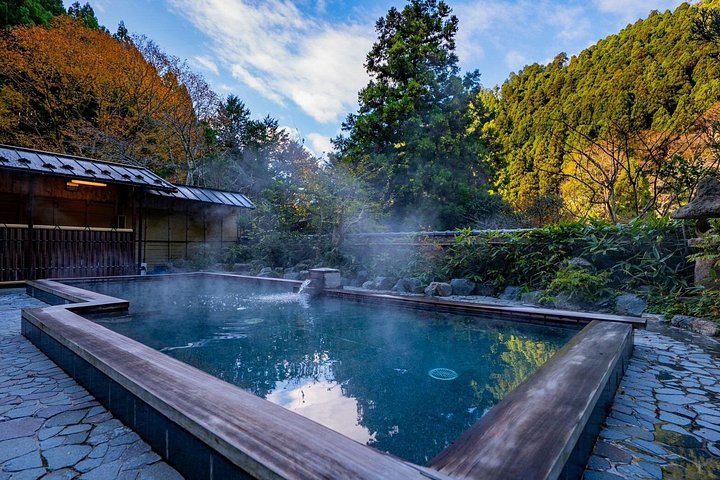
Kurama Onsen Guided Tour: Cultural Bathing Experience & Meal
From $69.35 · Price checked: Jul 2026
Best for: Kyoto visitors wanting a real onsen without going to Hakone
Not for: Travelers wanting a big resort onsen town or a ryokan overnight
Kurama Onsen day trip from Kyoto. Mountain temple + onsen in one day.
Check availabilityExternal booking on Viator · pricing and cancellations handled by Viator
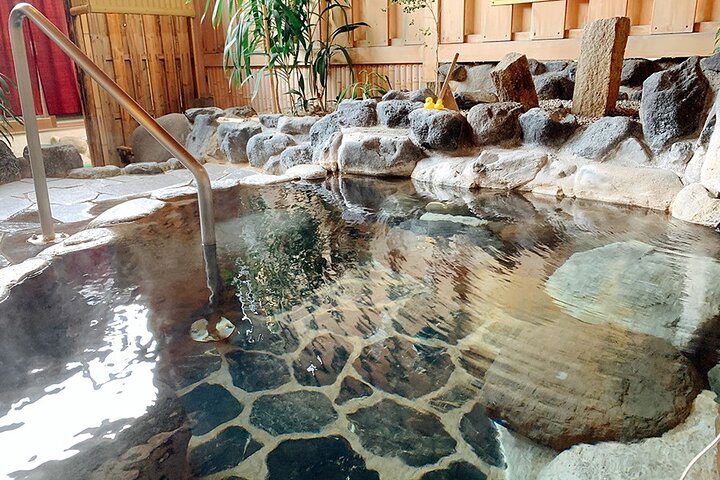
Tattoo-friendly open-air Onsen & drink
From $45 · Price checked: Sep 2026
Best for: Tattooed travelers seeking guaranteed access
Not for: Non-drinkers or anyone wanting a quiet solo soak away from a group
Tattoo-friendly rotemburo in Tokyo; confirmed policy, no questions asked. Central location.
Check availabilityExternal booking on Viator · pricing and cancellations handled by Viator
Before you visit
What I wish I'd known is that the slips that rattle a first visit are small and avoidable: the wrong curtain, a towel in the water, no cash, a bath that's closed that day.
My first visit to a rural onsen near Beppu taught me the curtain lesson in person. The curtain colors were hard to read in the dim light and I picked the wrong one. A jolt of panic hit me the moment I stepped through, and the attendant redirected me patiently, as though she did this every day.
Many onsen separate baths by gender (men/women) with colored curtains. Memorise the pairing: blue for men, red for women. When in doubt, ask.
What to Check Before Booking
Before you book a ryokan, check whether its rotemburo is private or shared. Reserve any private bath (kashikiri buro) at the same time as the room, not at check-in, since weekend slots fill up. Carry cash, because a rural onsen may not take cards. If your stay starts early in the week, confirm the bath isn't closed that day for cleaning.
Visit outdoor baths early in the day or later in the afternoon to avoid the peak. In spring and autumn, book ryokan well in advance, because cherry blossom season and peak foliage fill onsen towns. Our onsen trip planning guide and the Japan National Tourism Organization cover transport and regions in more depth.
This checklist is not meant for travelers who already bathe in onsen regularly.
Explore More
Related comparisons and guides:
Frequently Asked Questions
Can I wear a swimsuit in a Japanese onsen?
No, onsen bathing is done naked, and the small towel is only for washing.
What should I do if I have tattoos?
Contact the onsen or ryokan directly before you book, because policies change faster than guidebooks are updated.
Can I put my head under the water?
Keep your head above the surface, since some onsen prohibit dunking for hygiene reasons.
What should I buy or try after bathing?
Bottled milk from the vending machines is a long-standing post-bath tradition.
Written from Kyoto, Japan.