We earn a commission when you book through our links on Viator (PID P00299531), at no extra cost to you.
Winter Onsen in Japan: Snow, Steam, and 42-Degree Water
>The season the whole country waits for.
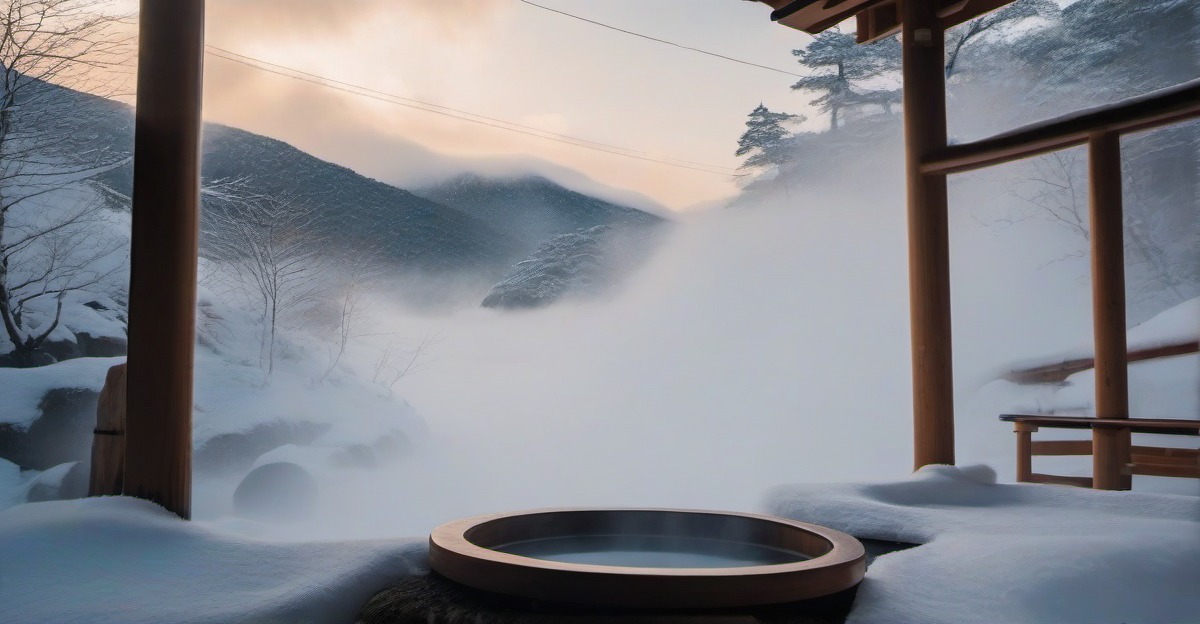
The best onsen experience in the world is a rotenburo (outdoor bath) in winter with snow falling on your shoulders while you sit in 42-degree water If you want to try it, I recommend the Mt Fuji And Hakone 1-Day Bus Tour Return By Bullet Train.. The contrast, freezing air above and volcanic water below, is the entire point. Your body does not know how to process it. It is the closest thing to a sensory reset that exists.
a sensory reset that exists.
We earn a commission when you book through our links on Viator (PID P00299531), at no extra cost to you.
Everything about winter makes an onsen better. The steam rises higher and thicker against the cold. The water feels hotter than it does in summer because the air around it is so much colder. Snow muffles sound, so the valley goes quiet, and the only thing you hear is water moving and snow settling on the rocks. If you have only ever bathed in an onsen in warm weather, you have not really had the experience. You should book a guided winter onsen experience and feel the difference for yourself, because a good guide handles the logistics that make snow-country bathing intimidating for first-timers: the transfers on icy roads, the ryokan etiquette, and the timing that puts you in the bath at dusk when the snow is at its most beautiful.The best winter onsen destinations
Japan has thousands of onsen towns, but a handful come alive specifically in winter, when the snow transforms them into something out of a woodblock print.
- Nyuto Onsen (Akita). Deep in the mountains of Tohoku, Nyuto is a cluster of old wooden ryokan where the snow piles up to the eaves. The milky white water and the buried, silent landscape make it the most atmospheric winter onsen in the country. You feel like you have stepped a century backward.
- Kusatsu (Gunma). The yubatake, the wooden channels at the center of town where the spring water is cooled, steams dramatically in the snow. Walking through Kusatsu on a cold night, wrapped in clouds of sulfurous steam under the lanterns, is a full-body experience before you even reach the bath.
- Jigokudani (Nagano). Famous for the snow monkeys who climb down from the cliffs to sit in the onsen. You watch macaques soak in steaming water with snow on their fur, then go and do exactly the same thing yourself. It is the most photographed winter onsen scene in Japan for a reason.
- Noboribetsu (Hokkaido). Hokkaido winters are serious, and Noboribetsu delivers. The Jigokudani, or hell valley, vents steam and boiling mud against banks of deep snow, and the town's baths draw on some of the most mineral-rich water in the country. This is winter onsen at its most elemental.
When to go, and when to book
January and February are peak onsen season. Japanese families book ryokan months in advance. The best rotenburo at the best ryokan book out by October. If you want a specific ryokan with a private outdoor bath in January, book in September.
This is the single most important piece of planning advice on this page. Winter onsen is not something you can arrange last minute during the peak weeks. The rooms with the best baths, the ones with a private rotenburo facing the mountains, are the first to disappear, and they disappear early. Domestic demand is high, and the New Year holiday period is booked out further ahead than almost any other time of year. Decide on your dates in late summer, choose your ryokan, and reserve before autumn arrives. If you are flexible, the weeks in early December and late February are quieter, the snow is still excellent, and availability is far more forgiving.
What to bring
Nothing beyond a small towel. The ryokan provides yukata, geta, and a larger towel for drying. You will walk from your room to the bath in a yukata and wooden sandals in the snow. The distance is usually 30 seconds. It is the best 30 seconds of your day.
That short walk is part of the ritual. You leave a heated room in a thin cotton yukata, step into air that is well below freezing, cross a few meters of snow in wooden sandals, and then lower yourself into water that is almost too hot to bear. Everything you need is already at the ryokan, so pack light. Bring warm clothes for the rest of your stay, something to keep your hair dry if you prefer, and nothing else. The point of a ryokan is that it takes care of you, and that begins the moment you check in and change into the yukata.
A note on tattoos
Winter onsen means more exposure. If your tattoo is on your back, it is visible in the bath. Check the tattoo policy before booking. Or book a kashikiri buro (private bath) and watch the snow fall on your own private rotenburo with zero policy concerns.
Many traditional onsen in Japan still restrict guests with visible tattoos, and in winter there is less room to be discreet, because you are not slipping quickly in and out of the water. A private bath solves the problem entirely. A kashikiri buro is reserved for you alone, usually by the hour or for the length of your stay, and no one else will see you. For a lot of travelers this is the ideal winter onsen anyway: your own outdoor bath, the snow coming down, complete privacy, and nothing to think about except the heat and the cold and the quiet.
Why it stays with you
People who bathe in a winter rotenburo tend to talk about it for years afterward. The reason is that it engages the body in a way ordinary travel does not. The heat, the cold, the steam, the silence, and the snow all arrive at once, and for a few minutes there is nothing to do and nowhere to be. That is the sensory reset, and it is worth planning a whole trip around. Choose your snow-country town, reserve early, pack almost nothing, and let winter do the rest.
Book a winter onsen experience
Beppu: Hot Springs Onsen Private Tour with Local Guide
Begin your tour at the legendary Beppu Jigoku Meguri (Hell Tour), where you can witness surreal geothermal sights like blood-red hot springs, bubbling mud pools
Check availabilityMt Fuji and Hakone 1-Day Bus Tour Return by Bullet Train
Escape from the city of Tokyo and discover Japan's natural miracle around the World Heritage Mt. Fuji and Hakone in 1 day! The deluxe coach will take you to th
Check availabilityBeppu: Hot Springs Onsen Private Tour with Local Guide
Begin your tour at the legendary Beppu Jigoku Meguri (Hell Tour), where you can witness surreal geothermal sights like blood-red hot springs, bubbling mud pools
Check availabilityBeppu: Hot Springs Onsen Private Tour with Local Guide
Begin your tour at the legendary Beppu Jigoku Meguri (Hell Tour), where you can witness surreal geothermal sights like blood-red hot springs, bubbling mud pools
Check availabilityMt Fuji and Hakone 1-Day Bus Tour Return by Bullet Train
Escape from the city of Tokyo and discover Japan's natural miracle around the World Heritage Mt. Fuji and Hakone in 1 day! The deluxe coach will take you to th
Check availabilityMt Fuji and Hakone 1-Day Bus Tour Return by Bullet Train
Escape from the city of Tokyo and discover Japan's natural miracle around the World Heritage Mt. Fuji and Hakone in 1 day! The deluxe coach will take you to th
Check availabilityBeppu: Hot Springs Onsen Private Tour with Local Guide
Begin your tour at the legendary Beppu Jigoku Meguri (Hell Tour), where you can witness surreal geothermal sights like blood-red hot springs, bubbling mud pools
Check availabilityExplore More
Related guides and comparisons: