I Spent Twelve Years Learning What Makes a Ryokan Stay Work — and What Ruins It
Autumn 2016. I booked a ryokan near Gora in Hakone for my partner's birthday. I chose the earliest dinner slot — 6pm — because I thought it would give us the evening free. I did not realize that the earliest slot means you have almost no time to bathe before eating. We rushed through check-in, scrambled to the bath for fifteen minutes, and sat down to kaiseki still warm and slightly flustered. The dinner was twelve courses of food I could not identify, served on lacquer trays by a woman in her seventies who spoke no English. It was wonderful. But the rushed bath before dinner soured the start. Since then I have stayed at more than forty ryokan across Japan. Here is what I have learned.
A ryokan with a private onsen solves the three biggest barriers for international travelers: nudity discomfort, tattoo anxiety, and etiquette fear. When the bath is yours alone, none of those things matter. You can take your time, figure out the washing ritual without an audience, and soak as long as you want. The question is not whether to book one — it is which type and at what price.
The Two Types of Private Onsen at Ryokan
There is a meaningful difference between the two kinds of private baths, and booking the wrong one for your situation is the most common mistake I see.
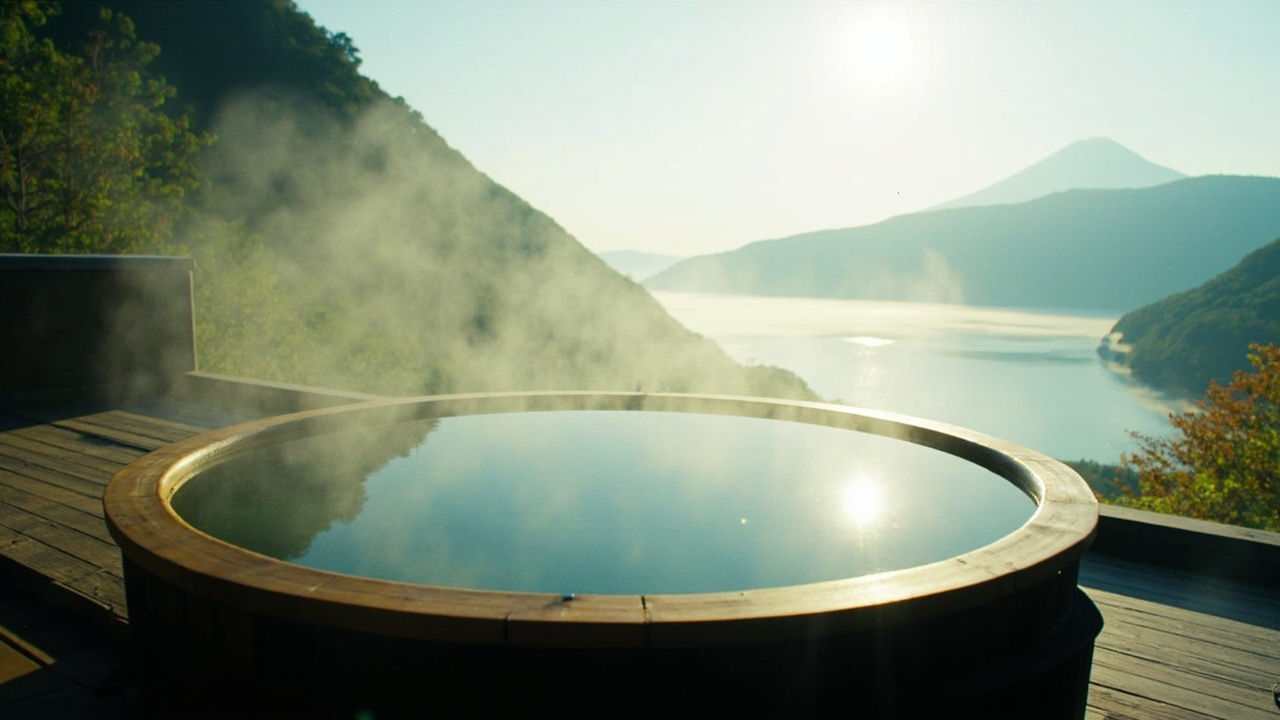
In-room private onsen (heya-buro). The bath is attached to your room — usually an outdoor rotemburo on a private balcony or terrace. You can use it whenever you want, for as long as you want, without booking a time slot. These rooms cost more — typically ¥25,000-40,000 per person per night — but the freedom is worth it if you plan to bathe multiple times. I stayed in an in-room rotemburo at a ryokan in Kurokawa Onsen (Kyushu) where the bath was fed by a mountain spring. I bathed at 10pm, again at 6am, and once more at 8am before check-out. Three sessions, zero scheduling. That is the advantage.
Reservable private onsen (kashikiri-buro). The bath is in a separate bathhouse on the ryokan property. You reserve a 50-60 minute time slot, usually at check-in. These cost less — typically ¥2,000-5,000 extra on top of your room rate — but the time limit can feel restrictive. I once booked a 50-minute slot at a Hakone ryokan and spent the last ten minutes watching the clock instead of the steam. Reserve a slot immediately at check-in (the best times go early) and book the latest available slot if you want to bathe under the stars.
Who This Is NOT For
Private onsen ryokan are wonderful but they are not for everyone. Here is who should reconsider:
Not for travelers on a tight budget. A basic ryokan with shared baths starts at ¥15,000 per person. Adding a private bath pushes that higher. If your nightly accommodation budget is under ¥10,000, stick to sento (public bathhouses) or day-use onsen. The private onsen near Tokyo page lists day-use options that do not require an overnight stay.
Not for the schedule-compressed. A ryokan stay demands time. Check-in at 3pm, bath before dinner, kaiseki at 6pm or 7pm, another bath after dinner, sleep on a futon that staff lay out while you eat, wake-up bath, breakfast at 8am, check-out at 10am. This is a twelve-hour ritual. If you are trying to squeeze a ryokan between sightseeing, you will miss the point and feel rushed. I have done this. It is not worth it.
Not for anyone who wants a Western hotel. Ryokan are not hotels. You sleep on a futon on tatami, not a mattress on a bed frame. You eat what the kitchen serves — there is no menu, and dietary restrictions require advance notice (tell them when you book, not when you arrive). The walls are often thin. The bath may have a sulfur smell. If any of this sounds like a problem rather than part of the experience, a ryokan is probably not for you.
Not for spontaneous bookers during peak season. Golden Week (late April-early May), autumn foliage (October-November), and New Year (January 1-3) require booking four to six weeks ahead. I thought I was clever visiting Hakone on May 4th, after the peak Golden Week rush. Every ryokan I wanted was booked solid. One near Gora posted a handwritten sign: "Queue estimated at two hours — please do not ask."
What Kaiseki Dinner Actually Involves
Kaiseki is the multi-course dinner served at ryokan, and it is worth understanding before you go so you know what to expect. The meal typically has eight to twelve courses: a small appetizer, sashimi, a grilled fish course, a simmered vegetable dish, a soup course, rice, pickles, a palate cleanser, and dessert. Each course arrives on its own ceramic dish or lacquer tray, arranged with precise attention to seasonal aesthetics. In autumn, maple leaves might decorate the sashimi plate. In spring, a cherry blossom might float in the soup.
I have had extraordinary kaiseki dinners — twelve tiny dishes at a ryokan near Gora, flavors I could not identify but loved, the delicate arrangement on lacquer trays lit by a single paper lantern. I have also had kaiseki that felt like an obligation — course after course arriving when all I wanted was to go back to the bath. The difference came down to timing. Book the later dinner slot (7pm or 7:30pm if available) so you have a full hour or more to bathe before eating. You will arrive at dinner relaxed instead of rushed, and the meal will taste better for it.
Dietary restrictions must be communicated when you book — not when you arrive. Kaiseki kitchens plan menus days in advance based on seasonal ingredients and guest counts. If you are vegetarian, have allergies, or cannot eat certain things, tell the ryokan at the time of reservation. Showing up and announcing you do not eat fish will result in the kitchen scrambling and you eating plain rice and pickles for dinner.
The Hidden Costs Nobody Mentions
Ryokan pricing is per person, not per room — this catches many first-timers. A rate of ¥25,000 is per person per night, so a couple pays ¥50,000. The price includes dinner and breakfast for both people, which helps justify it, but the sticker shock is real.
Beverages at dinner are not included. Beer, sake, and wine are charged separately and can add ¥3,000-5,000 to your bill. Many ryokan do not openly tell you this until the bill arrives. I now order one drink and switch to the complimentary tea — the tea is almost always excellent and pairs better with kaiseki than alcohol anyway.
Onsen tax (nyūtō-zei) of ¥150 per person per night is added at check-out. It is small but confusing if you do not expect it. Some ryokan also charge a bathing fee if you are not staying overnight but using the baths as a day visitor.
What to Do — And Not Do — During Your Ryokan Stay
Wear the yukata correctly. Left side over right. Right over left is for funerals. I made this mistake at Gora and the attendant adjusted my collar without a word. The most Japanese correction I have ever received. The yukata is your outfit for dinner, for walking around the property, and for walking to the bath. Wear it.
Do not wear outdoor shoes on tatami. Remove them at the entrance. Ryokan provide slippers for indoor use, but even those come off before stepping onto tatami mats. Socks or bare feet only on tatami.
Your futon will appear while you are at dinner. Staff lay it out during the evening meal. When you return to your room, the table and chairs will be gone, replaced by a futon on the floor. Do not be alarmed — this is normal. I wish someone had told me this before my first ryokan stay.
Breakfast is included and it is substantial. Grilled fish, miso soup, rice, pickles, tamagoyaki (rolled omelette), tofu, and sometimes natto (fermented soybeans). If natto is not your thing — the texture is divisive — you can politely leave it uneaten. Nobody will mind.
Do not skip the morning bath. The 6am rotemburo, with mist rising from the water and the forest waking up around you, is the best bath of the stay. I have done this at ryokan in Hakone, Kurokawa, and Nagano — the morning session is always the quietest and most memorable.
The Best Private Onsen Tours for First-Timers
If you are not ready for a full overnight ryokan, start with a private onsen day tour. These give you the bath experience without the commitment.
The Hakone Private Onsen Session is the most flexible option I have found. You book a 3, 4, or 6-hour private tour that includes onsen access, a private guide, and customizable stops around Hakone. I took the 4-hour version on a Tuesday in March and spent most of the time in the bath while the guide handled logistics. The rotemburo overlooked a cedar forest and I had it entirely to myself for the full session.
Hakone Private Onsen Session — Custom Tour 3/4/6 Hours
Private customizable Hakone tour with onsen access. Flexible duration, private guide. Best for couples and privacy seekers. The 4-hour version gives you a relaxed bath plus sightseeing time.
Check Availability →If Mount Fuji is your priority, the Fuji Five Lakes Chartered Car with Onsen combines lake views with an onsen stop. I booked this on a clear December day — the driver picked me up in Tokyo at 8am, we reached Kawaguchiko by 10am, and the onsen stop was at a ryokan with Fuji visible from the outdoor bath. The Fuji view from the water is the kind of thing that sounds too good to be true but is not. The catch: Fuji is visible roughly 80 days a year. Check the weather before you book.
Fuji Five Lakes Full-Day Chartered Car with Onsen
Private car service to Mount Fuji and Hakone areas with onsen stop. Full-day flexibility. Best for Fuji-first itinerary planners. Weather-dependent — book on a clear forecast day.
Check Availability →For the complete experience, the Hakone Ryokan Experience includes a private rotemburo session, multi-course kaiseki dinner, and overnight tatami stay. This is the one I recommend for special occasions — anniversaries, milestone birthdays, or simply because you want to do ryokan properly at least once. The kaiseki dinner alone is worth the price if you care about food.
Hakone Ryokan Experience — Private Rotemburo & Kaiseki Dinner
Full Japanese bathing ritual — outdoor rotemburo, multi-course kaiseki dinner, tatami sleeping. Private outdoor bath option. Best for overnight stays and special occasions. Book the later dinner slot.
Check Availability →What I Wish Someone Had Told Me
After twelve years and forty-plus ryokan stays, here is what I would tell anyone booking their first night:
Book the later dinner slot — 7pm or 7:30pm. You want at least an hour to bathe before eating. The earliest slot means rushing from the bath to the dining room still warm and slightly dizzy. I have made this mistake twice and regretted it both times.
Tell them about dietary restrictions when you book. Not at check-in, not at dinner. Kaiseki kitchens plan days ahead. If you are vegetarian, say so in the reservation. If you have allergies, list them. Showing up and announcing restrictions at the table will result in an apologetic chef and a very limited meal.
Check what day the onsen closes for cleaning. Many smaller ryokan close their baths one weekday — usually Monday or Tuesday — for maintenance. You can still stay at the ryokan but you cannot use the onsen. I once booked a Monday stay at a small ryokan in Nagano specifically for the rotemburo and arrived to find it drained for cleaning. Now I always check.
Use the rest area between baths. Most ryokan have a tatami room with tea and sometimes small snacks. Sit there, cool down, drink water. Your body needs time to recover between hot soaks. Skipping this step is how people faint — I have seen it happen twice.
And finally: do not overplan. The point of a ryokan stay is to slow down. One bath, one dinner, one sleep, one morning bath. If you try to pack sightseeing around it, you will miss the slow rhythm that makes ryokan worth the price. Pick a ryokan, arrive at 3pm, and let the ritual carry you from there.
Explore More
Related comparisons and guides: