A Personal Note
Two Towns, Two Rhythms
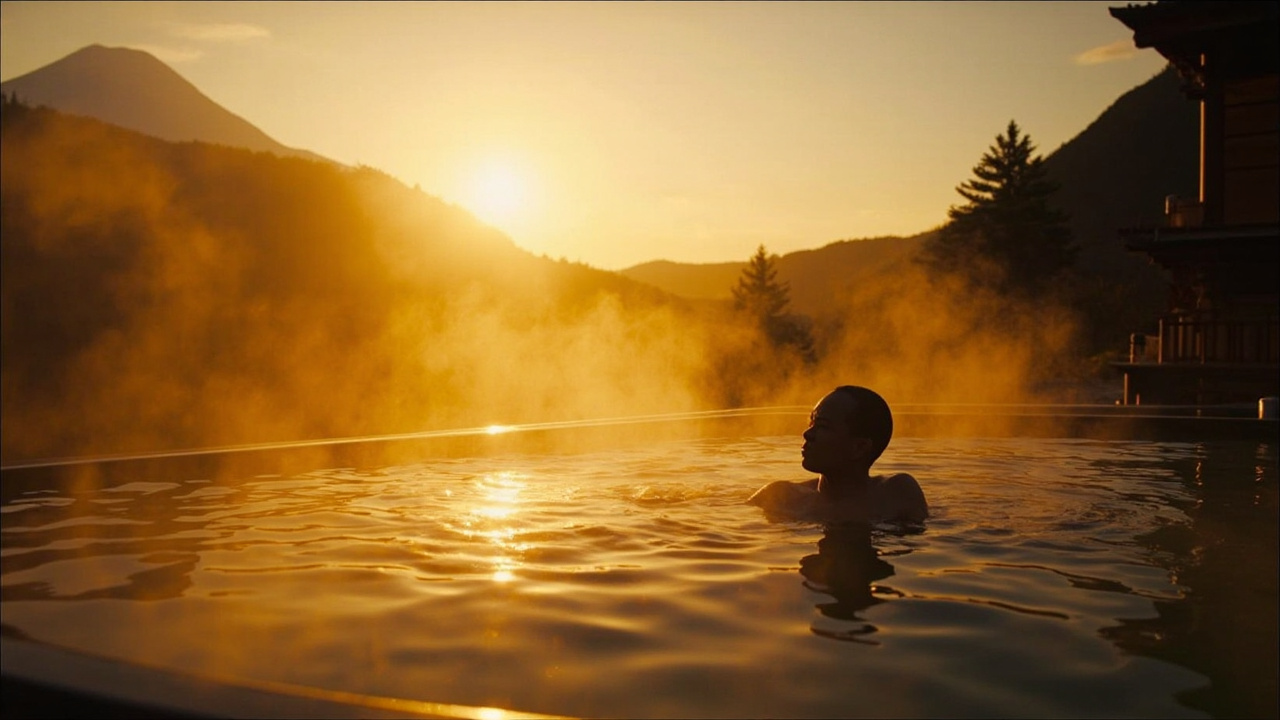
I first went to  Hakone in 2015, fresh off the plane, on my third day in Japan. I took the Odakyu Romancecar from Shinjuku, got off at Hakone-Yumoto, and spent two nights at a ryokan near Gora with a rotemburo facing the valley. The mountain changed colour every twenty minutes. On the second morning, Mount Fuji appeared at 6:45am — sharp and white against a cold blue sky — and I sat in the outdoor bath until my fingers wrinkled, watching it. That single morning convinced me that Hakone earns its reputation.
Beppu took me longer to reach. It wasn't until 2018 that I flew to Oita Airport and spent five days in the city, moving between bathhouses. The first thing I noticed was the steam — it rises from vents in the middle of residential streets, from drains, from cracks in the pavement. Locals cook eggs in wire baskets lowered into the vents. The Kannawa district smells of sulphur in a way that's neither pleasant nor unpleasant — it's just present, like the town is breathing. Where Hakone is a postcard, Beppu is a working geothermal city that happens to have some of the best baths in Japan. The two places could not be more different, and comparing them honestly is the only way to help you pick the right one.
Side by Side
The Core Difference
Hakone is a scenic mountain resort built around views and accessibility. Beppu is a working geothermal city with Japan's largest hot spring output — the baths are the city, not an attraction added to it.
| Factor | Hakone | Beppu |
|---|---|---|
| Getting from Tokyo | 90 min (Odakyu line, direct from Shinjuku) | 5 hours (Shinkansen to Kokura + Sonic limited express) |
| Cost level | Mid-range to premium. Day trips affordable; ryokan ¥12,000-35,000/night | Budget to mid-range. Sento entry ¥400-1,200. Ryokan ¥8,000-25,000/night |
| Setting | Volcanic mountain, Lake Ashi, Mount Fuji views on clear mornings | Geothermal city — steam vents in streets, 8 major hot spring sources, coastal location |
| Geothermal sources | 2 major sources (volcanic mountain system) | 8 major sources — Japan's largest hot spring water output by volume |
| Water variety | Neutral to slightly alkaline (pH 8-9), clear, mostly odourless | Extremely varied: sulphur (milky), iron (reddish), mud baths, sodium chloride, carbon dioxide |
| Signature experience | Lake Ashi pirate cruise + rotemburo with Mount Fuji view | Sand baths (buried in geothermally heated sand) + the Hells circuit (viewing-only hot springs) |
| Tattoo-friendly venues | Good selection at commercial complexes and day-trip venues | Tourist-oriented venues generally accepting; older residential sento may restrict |
| Day-trip viable | Yes — realistic day trip from Tokyo | No — requires at least 2 nights given 5-hour journey each way |
| Best combined with | Kamakura, Fuji Five Lakes, Tokyo | Yufuin, Kurokawa Onsen, Kumamoto, Mount Aso |
Compare in Detail
Hakone vs Beppu: Full Comparisone.
Factor Hakone Beppu Getting there from Tokyo 90 min via Romance Car; Shinkansen to Odawara then 40 min local train 5 hours: Shinkansen to Kokura (4.5h) + Sonic limited express (30 min); or fly to Oita Airport (1.5h flight + 40 min bus) Getting around town Hakone Free Pass covers train, bus, ropeway, pirate cruise — no car needed Buses connect bath districts; Beppu Onsen Coupon (¥2,000 for 6 baths) available at tourist office. Walking between Kannawa district baths is practical Onsen type Ryokan rotemburo, public sento, day-use onsen complexes, foot baths Everything: residential sento, sand baths, mud baths, steam baths, viewing-only Hells, modern complexes, outdoor rotemburo Outdoor rotemburo Available at most ryokan; Fuji views from eastern-side properties on clear mornings Available throughout the city — from mountain-view rotemburo to ocean-view baths. More variety in setting than Hakone Sand baths None Beppu's Kannawa district sand baths are unique — geothermally heated beach sand. Sessions last 10-15 minutes. You wear a light yukata Best season January-March (clearest Fuji views, lowest crowds); October-November (autumn foliage, very crowded) Year-round. Winter is mild with no snow. Summer is hot but less crowded than Hakone. Spring and autumn are pleasant Peak season crowding Very crowded Oct-Nov (maple leaves) and Golden Week. Ryokan book out 3 months ahead Less crowded than Hakone overall. Golden Week and Obon (mid-August) are busiest. Weekdays are quiet year-round Typical onsen water style Neutral to slightly alkaline, clear, odourless. Good for skin. Volcanic mineral content from Hakone's geothermal system High variety: sulphur springs (milky white/blue, egg smell — Kannawa), iron springs (reddish-brown — Myoban), mud baths, clear sodium chloride springs Local food Soba noodles, kuro-tamago (black eggs cooked in hot spring water), kaiseki Jigoku-mushi (hell-steamed food cooked in vent heat), toriten (chicken tempura), fresh seafood from Beppu Bay, onsen tamago Nighttime experience Lake Ashi at night under clear skies. Ryokan illuminations in autumn. Limited nightlife beyond ryokan dining Late-night bathing culture — many sento open until midnight. Takegawara Onsen open until 9:30pm. Beppu has more evening activity than Hakone Language barrier Many commercial onsen have English signage and multi-language bath rules. Tourist-ready Less English-friendly overall. Tourist office has English materials. Smaller residential sento may require Japanese or a guide Photography Mount Fuji at sunrise from Lake Ashi or ropeway. One of Japan's most photographed onsen views. Best January-March Steam rising from street vents at dusk. The Hells (especially Blood Pond Hell). Sand bath photos possible with permission at some facilities
| Factor | Hakone | Beppu |
|---|---|---|
| Getting there from Tokyo | 90 min via Romance Car; Shinkansen to Odawara then 40 min local train | 5 hours: Shinkansen to Kokura (4.5h) + Sonic limited express (30 min); or fly to Oita Airport (1.5h flight + 40 min bus) |
| Getting around town | Hakone Free Pass covers train, bus, ropeway, pirate cruise — no car needed | Buses connect bath districts; Beppu Onsen Coupon (¥2,000 for 6 baths) available at tourist office. Walking between Kannawa district baths is practical |
| Onsen type | Ryokan rotemburo, public sento, day-use onsen complexes, foot baths | Everything: residential sento, sand baths, mud baths, steam baths, viewing-only Hells, modern complexes, outdoor rotemburo |
| Outdoor rotemburo | Available at most ryokan; Fuji views from eastern-side properties on clear mornings | Available throughout the city — from mountain-view rotemburo to ocean-view baths. More variety in setting than Hakone |
| Sand baths | None | Beppu's Kannawa district sand baths are unique — geothermally heated beach sand. Sessions last 10-15 minutes. You wear a light yukata |
| Best season | January-March (clearest Fuji views, lowest crowds); October-November (autumn foliage, very crowded) | Year-round. Winter is mild with no snow. Summer is hot but less crowded than Hakone. Spring and autumn are pleasant |
| Peak season crowding | Very crowded Oct-Nov (maple leaves) and Golden Week. Ryokan book out 3 months ahead | Less crowded than Hakone overall. Golden Week and Obon (mid-August) are busiest. Weekdays are quiet year-round |
| Typical onsen water style | Neutral to slightly alkaline, clear, odourless. Good for skin. Volcanic mineral content from Hakone's geothermal system | High variety: sulphur springs (milky white/blue, egg smell — Kannawa), iron springs (reddish-brown — Myoban), mud baths, clear sodium chloride springs |
| Local food | Soba noodles, kuro-tamago (black eggs cooked in hot spring water), kaiseki | Jigoku-mushi (hell-steamed food cooked in vent heat), toriten (chicken tempura), fresh seafood from Beppu Bay, onsen tamago |
| Nighttime experience | Lake Ashi at night under clear skies. Ryokan illuminations in autumn. Limited nightlife beyond ryokan dining | Late-night bathing culture — many sento open until midnight. Takegawara Onsen open until 9:30pm. Beppu has more evening activity than Hakone |
| Language barrier | Many commercial onsen have English signage and multi-language bath rules. Tourist-ready | Less English-friendly overall. Tourist office has English materials. Smaller residential sento may require Japanese or a guide |
| Photography | Mount Fuji at sunrise from Lake Ashi or ropeway. One of Japan's most photographed onsen views. Best January-March | Steam rising from street vents at dusk. The Hells (especially Blood Pond Hell). Sand bath photos possible with permission at some facilities |
The Verdict
So Which Should You Choose?
Choose Hakone if:
- You're based in Tokyo and want an onsen trip without a long journey
- Seeing Mount Fuji is on your Japan list
- You want the ryokan experience — tatami, kaiseki dinner, futon sleeping
- You have 1-3 days to spare, not a full week
- You're visiting Japan for the first time
- You want the
 Lake Ashi pirate cruise and ropeway as part of the experience
Choose Beppu if:
- You've already been to Hakone or Japan before and want something different
- You're truly interested in onsen itself — water types, bathing variety, sand baths
- You're planning a Kyushu trip (Beppu combines well with Yufuin, Kurokawa, Kumamoto)
- You have at least 3-4 days to spend in the Beppu area
- You want to try Japan's only sand baths and mud baths in one town
- The idea of steam rising from pavement cracks in a residential neighbourhood sounds appealing, not off-putting
The honest answer
Hakone is the safer first trip. It's closer, prettier on first impression, and the Fuji view from an outdoor bath is a truly special moment. Beppu rewards people who already understand onsen — the water variety, the sand baths, the residential sento hopping — and is a richer experience for return visitors. If you're planning one Japan trip in your life, do Hakone. If you know you'll be back, save Beppu for round two.
Honest Guidance
Who Should Skip This Comparisone.
Not every traveler fits into the Hakone-or-Beppu framing. If any of these apply to you, neither destination may be the right choice.
- If you are only in Japan for 5-7 days and staying in Tokyo — Beppu is too far. Spend 2 nights in Hakone instead of trying to rush both. Five hours each way for a 2-night Beppu stay eats two full days of a short trip.
- If you have limited mobility — Both destinations involve walking on uneven terrain. Hakone's mountain railway and ropeway are accessible, but many ryokan have stairs and no lifts. Beppu's sand baths require lying flat and being covered — claustrophobia or back issues are a real concern. Check specific venue accessibility before booking.
- If you're on a strict backpacker budget (under ¥5,000/day) — Neither destination is ideal. Hakone's ryokan start at ¥12,000/night. Beppu has cheap sento (¥400-1,200) but accommodation still costs ¥6,000+ per night. Stick to Tokyo sento or day-use onsen near your base city instead.
- If you're only interested in the most photogenic onsen experience — Hakone's Fuji view from the right ryokan is the clear winner for photography. Beppu's appeal is experiential — the sand bath, the street steam, the Hell circuit — and photographs less dramatically.
- If you want the traditional ryokan experience specifically — Hakone has hundreds of ryokan concentrated in a small area with varied price points. Beppu has ryokan but they're scattered across a working city. For a first ryokan stay, Hakone is easier to get right.
Start Planning
Browse Each Destinatione.
Hakone Onsen
15 onsen experiences — day trips, ryokan stays, Mount Fuji views from outdoor baths.
Explore Hakone →
Beppu Onsen
8 geothermal sources, sand baths, mud baths, steam vents — Japan's hot spring capital.
Explore Beppu →
Hakone Onsen
15 onsen experiences — day trips, ryokan stays, Mount Fuji views from outdoor baths.
Explore Hakone →Beppu Onsen
8 geothermal sources, sand baths, mud baths, steam vents — Japan's hot spring capital.
Explore Beppu →Decision Framework
Which Is Right For You — The Detailed Breakdown
The table above gives you the facts. This section gives you the framework to decide based on your specific trip.
Your Japan Itinerary
This is the single biggest factor. If you're doing the classic Tokyo-Kyoto-Osaka route, Hakone slots in naturally between Tokyo and Kyoto — it's on the way and you lose no time. Beppu is on Kyushu, a completely different island. You don't "add Beppu" to a standard Honshu trip — you plan a trip around it. If Kyushu is not already in your itinerary, choose Hakone.
What You Want From the Baths
Hakone's onsen are good — clean, well-maintained, scenic. Beppu's onsen are an education. The water changes colour, texture, and smell between bathhouses. One sento has milky blue sulphur water that leaves your skin soft for hours. Another has rust-red iron water. A third is a mud bath where you sink into warm volcanic sludge. If you're curious about onsen itself — the geology, the water chemistry, the variety — Beppu is the better destination by a wide margin.
Travel Time and Trip Length
Hakone from Tokyo: 90 minutes. Beppu from Tokyo: 5 hours. That's the reality. If you have a 7-day Japan trip, the 10 hours of round-trip travel to Beppu is two half-days gone. Hakone fits into a 24-hour window — arrive at 11am, bathe, eat, sleep, bathe again, leave by noon. For trips under 10 days, Hakone is the practical choice. For trips of 14+ days that include Kyushu, Beppu is worth the journey.
Budget
Hakone's ryokan are more expensive for equivalent quality — you're paying for the Fuji view and the Tokyo proximity. A decent Hakone ryokan with rotemburo runs ¥18,000-35,000 per person. Beppu has more options under ¥15,000 and the Beppu Onsen Coupon (¥2,000 for 6 baths) makes bath-hopping affordable. If budget is tight, Beppu delivers more bathing per yen. If budget is flexible, Hakone's premium ryokan are worth the splurge for a special occasion.
Season
Hakone in January-February: clearest Fuji views, snow-dusted mountain, cold air against hot water. This is peak Hakone season for good reason. Hakone in July: hot, humid, Fuji often hidden in haze. Beppu is more consistent year-round — it's warm in winter (no snow), hot but bearable in summer (the sand baths work in any weather), and pleasant in spring and autumn. Beppu's lack of extreme seasonality is a strength if you're travelling outside the ideal windows.
Cultural Depth vs Scenic Beauty
Hakone is a resort town — it exists to serve visitors, and it does it well. Beppu is a real city where onsen is woven into daily life. In Beppu you'll see elderly residents doing their morning sento run, families cooking with steam vents, and bathhouse workers who've been at the same establishment for forty years. Hakone gives you the polished experience. Beppu gives you the lived one. Neither is better — they serve different travelers.
Questions
Hakone vs Beppu Onsen — FAQ
Hakone is the better first-time choice. It's 90 minutes from Tokyo, the logistics are simpler, and the Mount Fuji view from the right ryokan is a classic Japan experience. Beppu requires a 5-hour train journey from Tokyo and rewards visitors who already understand onsen culture. Save Beppu for your second or third Japan trip.
No — Beppu is a 5-hour journey from Tokyo (Shinkansen to Kokura, then Sonic limited express to Beppu). You need at least 2 nights in Beppu to make the trip worthwhile. For a day trip from Tokyo, Hakone is the practical choice at 90 minutes each way.
Beppu has far more variety. It draws from 8 major geothermal sources, producing Japan's largest volume of hot spring water. You can bathe in sulfur, iron, sodium chloride, and mud baths all within the same town. Hakone's water is neutral to slightly alkaline (pH 8-9), clear and odorless — good for skin but less varied.
Hakone has more confirmed tattoo-friendly commercial complexes due to international tourist volume. Beppu has a mix — the larger tourist-oriented venues and sand bath facilities are generally accepting, but smaller residential sento in Beppu's older districts may still restrict visible tattoos. Always call ahead at either destination.
Hakone is best in January-March (clearest Fuji views, lowest crowds) and October-November (autumn foliage, very crowded). Beppu is warm year-round and less seasonal — winter has fewer tourists but no snow, summer has festivals but can be hot. Beppu's sand baths are pleasant year-round.
For Hakone: the JR Pass covers the Shinkansen to Odawara but the Odakyu Romancecar limited express supplement (¥1,200) is not covered. The Hakone Free Pass is separate from the JR Pass and covers all transport within Hakone. For Beppu: the JR Pass covers the Shinkansen to Kokura and the Sonic limited express to Beppu — making a Beppu trip much better value with a JR Pass. Without one, the round-trip train fare from Tokyo exceeds ¥45,000.
Technically yes, but it requires at least 12-14 days and a willingness to travel. The route: Tokyo → Hakone (2 nights) → back to Tokyo or Odawara → Shinkansen to Kokura → Beppu (3 nights). The total travel time between Hakone and Beppu is about 6 hours. This works if you're doing a comprehensive Japan trip that includes both Honshu and Kyushu. For shorter trips, pick one.
Explore More
Related comparisons and guides:
Emi Kato
Japanese onsen specialist · 60+ onsen visited · 12 years in Japan
Last updated: June 2026
Written by Emi Kato — Japan travel and onsen specialist; based in Kyoto. Twelve years documenting Japan's hot spring culture for international visitors. Last reviewed June 2026.