Ryokan vs Hotel Onsen in Japan: Costs, Customs and What to Expect
We earn a commission when you book through our links on Viator (PID P00299531), at no extra cost to you. This is how we keep the site free. Learn more →
Ryokan vs Hotel Onsen: What the Booking Page Leaves Out
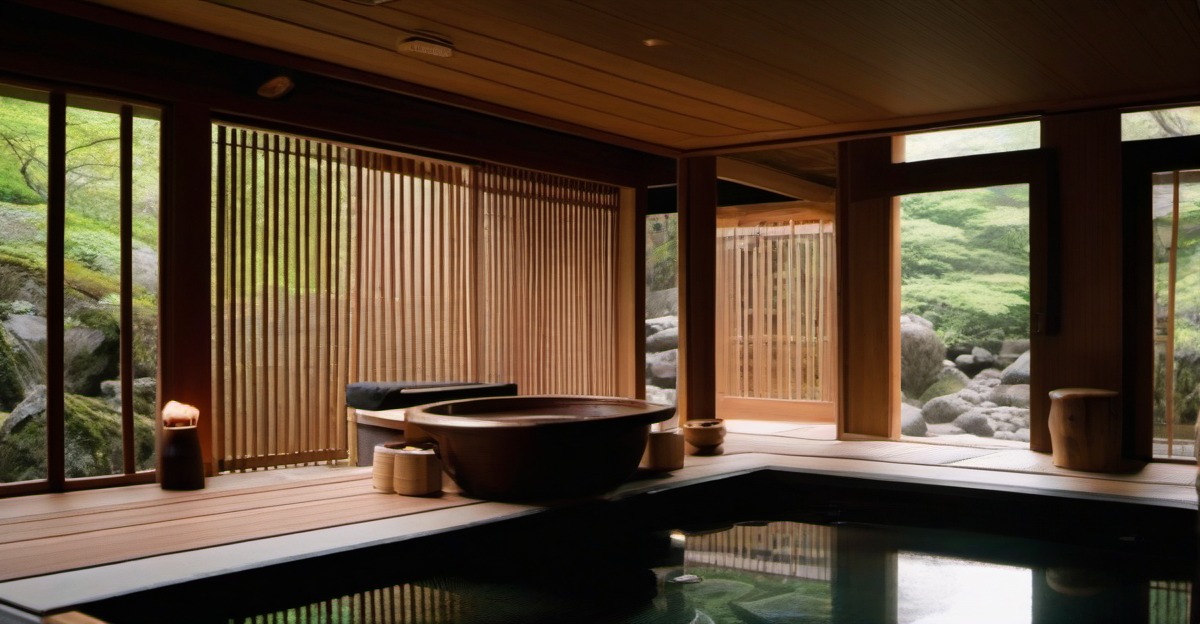
A ryokan sells you a fixed daily rhythm along with the bath: set check-in and check-out, an agreed breakfast time, a kaiseki dinner and staff who lay out your futon while you eat. A hotel onsen trades that structure for your own schedule.
Start with the money. A basic ryokan with onsen access starts at 15000/night. Kaiseki dinner is the multi-course traditional meal served at ryokan, and it anchors the whole evening.
Check-in at traditional ryokan starts at 3pm, with check-out at 10am. Many ryokan serve breakfast in-room at a specific time you must agree to. At traditional ryokan, your futon will be laid out by staff while you're at dinner, so don't return to your room expecting to see chairs.
Read each hotel's own terms. For a wider view of onsen regions and ryokan types, the Japan Onsen: Official Cultural Tourism Site is a sensible starting point, and our ryokan guide goes deeper on room styles.
Yukata (light cotton kimono) is provided at ryokan for wearing around the property. In Kinosaki Onsen, Hyogo, in October 2023, I checked into the ryokan in the afternoon, changed into the provided yukata, and walked straight out into the street. The whole town was in yukata, couples and families and groups of friends shuffling between public baths in wooden geta, and the clicking on the pavement became the soundtrack of my evening. The fifth bath was empty by the time I reached it, and the seventh, Satono-yu, had a rotemburo with steam drifting up into the autumn night sky. Wrap the yukata left side over right; right over left is for funerals.
Skip the ryokan if your train times or work calls cannot bend around a fixed check-in window and an agreed breakfast slot.
Hakone Full-Day Private Tour: The Experience
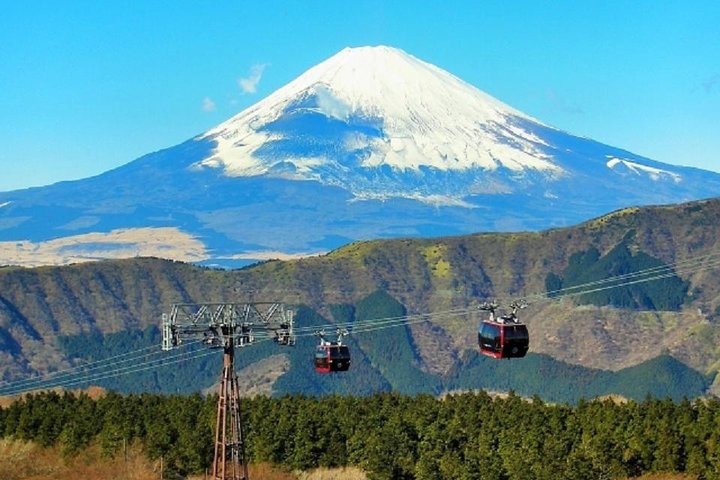
This listing bundles the pieces a ryokan night turns on: an outdoor rotemburo, a multi-course kaiseki dinner and tatami sleeping, with a private outdoor bath option on top. It is pitched at overnight stays and special occasions, and I think that framing is right. Book this one for an anniversary or a first ryokan night where you want the customs laid out for you. Skip it if what you want is a hotel's loose timetable, because the ritual is the whole point.
Hakone Full-Day Private Tour
From $253.66 · Price checked: Aug 2026
Best for: Overnight stays and special occasions
Not for: Day trippers who cannot spare a night or prefer Western style hotels
Full Japanese bathing ritual; outdoor rotemburo, multi-course kaiseki dinner, tatami sleeping. Private outdoor bath option.
Check availabilityExternal booking on Viator · pricing and cancellations handled by Viator
Private Tour - Hakone Day Trip! A Tour to Explore All Must-Sees!: The Experience
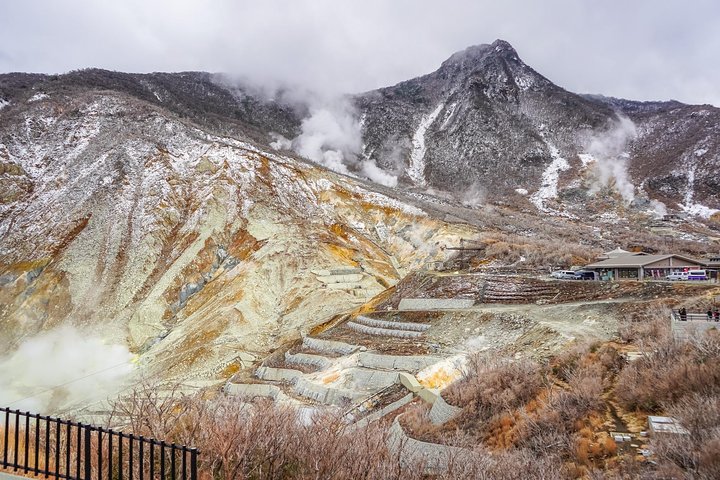
A private, customizable Hakone day with a driver-guide lets you set your own pace, which pairs neatly with a hotel onsen base where nobody expects you back for a set dinner. Couples and families who want a private Hakone itinerary are the obvious fit. Travellers who want the kaiseki-and-futon evening should look at the overnight option above instead. If you are still weighing regions, our Hakone vs Kyoto onsen comparison sets the two side by side.
Private Tour - Hakone Day Trip! A Tour to Explore All Must-Sees!
From $176.60 · Price checked: Aug 2026
Best for: Couples and families wanting a private Hakone itinerary
Not for: Solo travelers on a budget who would do fine on a shared tour
Private customizable Hakone tour. Driver-guide, set your own pace.
Check availabilityExternal booking on Viator · pricing and cancellations handled by Viator
How I Would Make the Decision
Decide on three questions: do you need a private bath, do you have tattoos, and can you live with a fixed evening? A ryokan wins if the evening ritual matters and the bath arrangement suits you. A hotel onsen wins if your schedule is loose or unpredictable.
Private baths first. Private onsen (kashikiri-buro) at ryokan book in 50-minute slots and cost ¥2,000-5,000 extra on top of the room rate. Our Tokyo private onsen guide covers options if a shared bath is a dealbreaker.
Tattoos second, and this is where the website and the front desk can disagree. At a small ryokan in rural Nagano in January 2023, I sent a polite email in basic Japanese explaining that I had a small tattoo and asking whether I could use the bath. The reply came back within the hour: no problem, please use it later in the evening when there are fewer guests. They did not even charge me extra. My takeaway is simple: a published policy is where the conversation begins. Ask directly and politely, whether you are booking a ryokan or a hotel. The JNTO onsen etiquette and rules page is the place to read up on tattoo policies and bathing rules before you write that email. Some ryokan with private onsen still require covering in shared dining areas, so ask about the dining room as well as the bath.
Season is the third variable. According to our seasonal notes, snow plus an outdoor rotemburo is the classic winter onsen experience and Nagano is prime; in autumn, Hakone and Kyoto are especially crowded, so book well ahead. For snow forecasts and regional conditions, check the Japan Meteorological Corporation before you commit.
Skip the hotel onsen if the kaiseki dinner and futon ritual are the reason you came to Japan.
Why the Mt. Fuji and Hakone Private Tour Nearly Wins the Argument
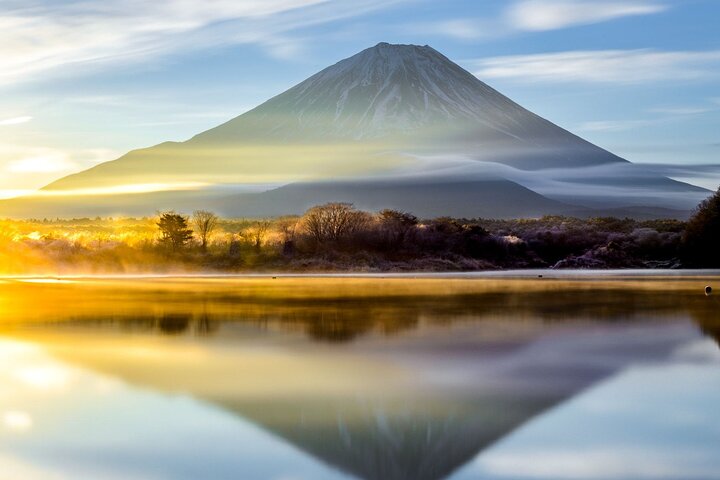
For Tokyo-based visitors who have not decided on an overnight at all, this private tour is the most accessible way into Hakone onsen country. It covers the major highlights without an overnight stay, which makes it a low-commitment test before you book a ryokan on a later trip. Mount Fuji views depend on weather, so check the forecast the evening before. Skip it if you already know you want the full ryokan evening; a day trip ends before the kaiseki begins.
Private Tour to Mt. Fuji and Hakone (Fully Licensed Operator)
From $448.65 · Price checked: Aug 2026
Best for: First-timers and Tokyo day-trippers
Not for: Travelers who like building their own Hakone route at a slower pace
The most accessible Hakone onsen for Tokyo-based visitors. Covers major highlights without overnight stay. Mount Fuji views depend on weather.
Check availabilityExternal booking on Viator · pricing and cancellations handled by Viator
Hakone Private Custom Tour: For Couples Who Want Privacy
This private, customizable Hakone tour includes onsen access with a private guide and a flexible duration. Couples and privacy seekers get the most from it, especially anyone who would rather not share a bath with strangers on their first try.
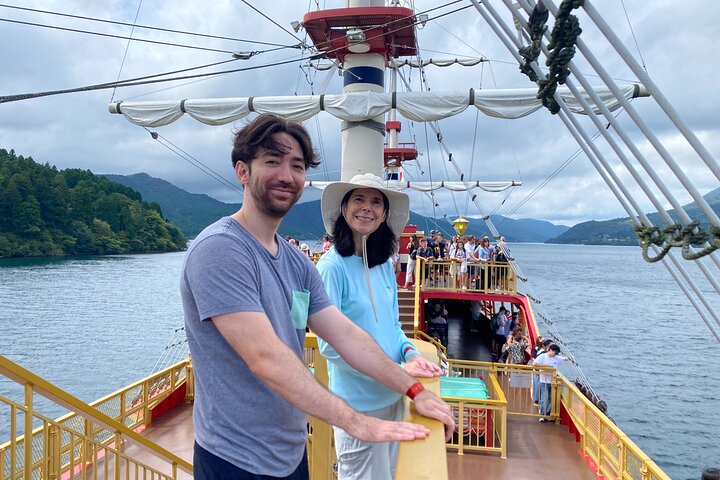
Hakone Private Custom Tour: Mt. Fuji View, Nature & Shrine
From $190 · Price checked: Sep 2026
Best for: Couples and privacy seekers
Not for: Solo budget travelers or anyone curious about communal public bath culture
Private customizable Hakone tour with onsen access. Flexible duration, private guide.
Check availabilityExternal booking on Viator · pricing and cancellations handled by Viator
Before you visit
Before booking either stay, check the bath closure day, bring cash, book a later dinner slot, and learn the washing routine.
My own mistake was assuming I knew what was worth seeing. In Kusatsu Onsen, Gunma, in February 2024, the yumomi performance was listed in every guidebook, so I assumed it would be touristy and skipped it on my first day. On the second day I wandered in late and found women in traditional dress singing a work song in the local dialect while churning scalding water with long wooden paddles. Steam filled the hall so thickly my glasses fogged instantly. By the end the water was cool enough to touch, and I understood the technique was not a show but something still plainly necessary.
In Beppu's Kannawa district in March 2022, a local woman handed me a wire basket with two eggs and a sweet potato and pointed at a steam vent hissing in the pavement. I lowered the basket in, and the eggs came out as perfectly cooked onsen tamago, though the sweet potato took far longer. She charged me a few coins and told me the vent has been used this way since the Edo period.
A few checks belong on every booking, ryokan or hotel:
- Confirm the bath is open on your dates. Some smaller onsen close one weekday for cleaning, so a Monday or Tuesday stay deserves a quick email.
- Carry cash. Rural onsen may not accept credit cards, and the coin lockers at onsen entrances require 100 yen coins.
- Avoid the earliest ryokan dinner slot if you want a relaxed bath first.
- Wash fully at the stations before entering the water, and pull the shower head out of the bucket before you use it so you do not spray your neighbours.
- Keep the small towel out of the bath water; rest it on your head or on the side.
- Pick one onsen town per day and do it properly.
For transport and regional planning, JNTO is the official reference, and our planning hub and etiquette guide pick up where this checklist stops. Do not bathe after heavy drinking; it raises the risk of fainting. If you feel dizzy or nauseous in the water, get out immediately and cool down.
Explore More
Related comparisons and guides:
Frequently Asked Questions
Do I need to tip at a ryokan or hotel onsen?
Tipping is not practiced at Japanese onsen or ryokan. A clear thank-you at check-out is all you need to leave behind.
Can I wear a swimsuit in the onsen bath?
No, onsen bathing in Japan is done naked. The small tenugui towel is for washing, not for modesty.
Can I put my head under the water?
Keep your head above the surface, because some onsen prohibit dunking it for hygiene reasons.
Can I take photos in the bathing area?
Leave your phone in the changing room, since photography inside bathing areas is prohibited.
What should I drink around bathing?
Drink water before and after bathing, because onsen can dehydrate you quickly. Many onsen also sell milk in glass bottles at the vending machines as a post-bath tradition.
Is there anything to buy as a souvenir from an onsen town?
The classic souvenir is local onsen manju, a steamed bun sold in onsen towns.
Written from Kyoto, Japan.