
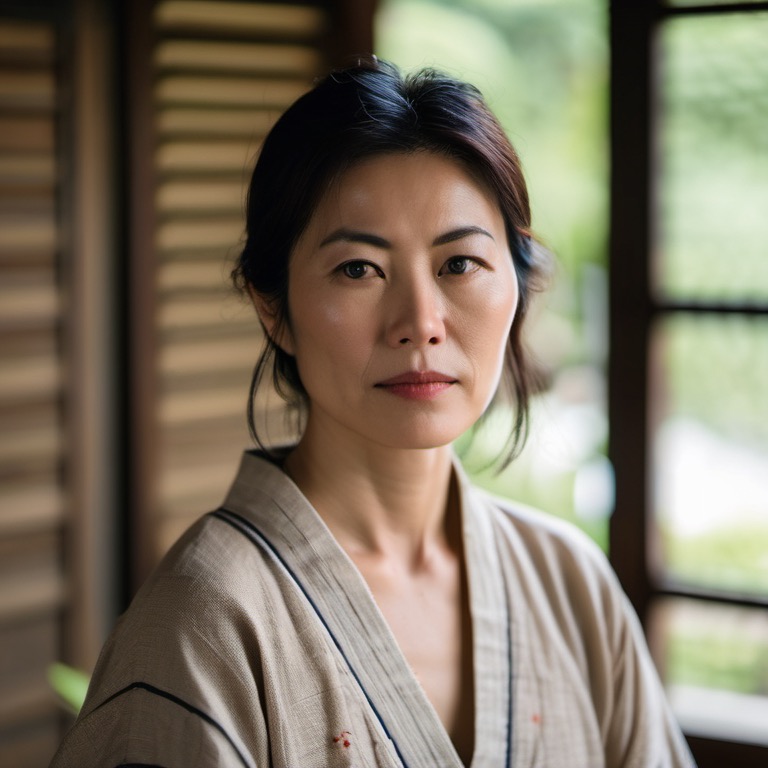
My first ryokan was a disaster of expectations If you want to try it, I recommend the Mt Fuji And Hakone 1-Day Bus Tour Return By Bullet Train.. I had booked what I thought was the nicest room in a small onsen town in Hakone. I arrived at 3pm, was shown to a tatami room with a low table and shoji screens, and immediately felt that I had made a series of mistakes. I did not know where to put my shoes. I did not know how to sit at the low table without my knees complaining. I did not know whether to wear the yukata for dinner or change into something else. By the time the kaiseki dinner arrived, fifteen small dishes in a careful sequence, I was exhausted from trying to read the room. I ate in silence, took a long bath in the shared indoor pool where I was clearly the only tattooed person, and went to bed at 8pm feeling I had somehow failed at being a guest.
t.I have stayed in perhaps thirty ryokan since. The second time was easier. The fifth time was genuinely enjoyable. By the tenth, the tatami, the futon, the kaiseki, and the formality had stopped being a puzzle and become something I looked forward to. The point of this page is to compress that learning curve for you, so your first ryokan feels less like a test and more like the gift it is meant to be.
What a ryokan actually is
A ryokan is a traditional Japanese inn. The defining features are tatami mat floors, futon bedding laid out on the floor, shoji screen doors, a shared bathing area fed by hot spring water, and most a multi-course dinner called kaiseki served in your room or in a private dining area. A ryokan almost always provides a yukata for each guest. You wear it from the moment you arrive until the moment you leave.
Not every ryokan has an onsen, and not every ryokan with an onsen draws from a natural spring. Some use heated tap water with minerals added. The distinction matters less than you might think. The bathing experience at a well-run ryokan is excellent either way, and the food, the room, and the service are usually the larger part of what you are paying for.
The private bath: kashikiri buro
Most mid-range and higher ryokan offer a kashikiri buro, a private bath that you can reserve by the hour for the exclusive use of you and your party. The bath is usually one of the property's standard baths, set aside during your reserved time slot. You walk in, lock the door behind you, soak at your own pace, and nobody else sees you.
A ryokan with a private bath solves the tattoo problem entirely. There is no shared bathing. There is no awkward counter conversation. There is no tape needed. The water is the same spring as the public bath, and the experience is otherwise the same. For tattooed travellers who want the full onsen without the policy headache, this is the cleanest answer, and it is the one I default to now.
You book the kashikiri buro when you make the reservation. The good ones book out weeks in advance, particularly at popular ryokan during peak season. If you wait until check-in to ask, you will often be told the slots are full. Reserve at the same time as the room, name the times you want, and confirm by email a few days before arrival.
The cost varies. Some ryokan include the first hour free as part of the room rate. Others charge 2,000 to 5,000 yen per 45 to 60 minute slot. A few high-end properties charge 10,000 yen or more. The average is around 3,000 yen per slot, which is a small premium on top of an already expensive night.
What to expect from the room
You will arrive between 2pm and 5pm, usually. Most ryokan ask you to confirm an arrival time so the staff can prepare the room. Check-in is at a small reception desk near the entrance, where you will be offered tea and a small sweet while the paperwork is processed. You will be shown to your room by a staff member, who will explain the room layout and the schedule for dinner and breakfast.
The room itself is tatami. There is a low table in the centre, often with a small flower arrangement, and a sunken area called a horigotatsu, where the table sits over a floor-level recess so you can stretch your legs underneath. Cushions sit around the table for dinner. A small alcove called a tokonoma usually holds a hanging scroll or a flower arrangement. The view, when there is one, is typically a Japanese garden.
Your futon will be folded in a closet when you arrive. Staff will lay it out while you are at dinner. In the morning, you are usually asked to leave the room by 10am or 11am so the futon can be put away and the room reset. This sounds strict but it is standard practice, and the rhythm of the day becomes part of the experience.
Kaiseki dinner: how to approach it
Kaiseki is a multi-course Japanese dinner, typically eight to fifteen small dishes served in a fixed sequence. The sequence moves from lighter to richer, with seasonal ingredients and regional specialties. The dishes arrive on a lacquered tray, one or two at a time, paced over 90 minutes to two hours.
You do not need to know what every dish is. The staff will explain each one as it arrives, often in English at higher-end properties, often in pantomime at smaller ones. The right approach is to try everything, ask about anything you do not recognise, and eat at the pace the kitchen sets. Pouring your own sake is fine. Pouring for your dining companion first is the polite version.
If you have dietary restrictions, mention them at the time of booking. Most ryokan can accommodate vegetarian, pescatarian, gluten-free, and common allergies with a few days' notice. Last-minute requests are harder. The kitchen is sourcing for your specific meal.
Breakfast the next morning is usually a traditional Japanese set, with grilled fish, rice, miso soup, pickles, and a small egg dish. It arrives at a fixed time, often 7:30 or 8am. It is more food than you expect at 7:30am. Plan accordingly.
Price range and what to expect
Ryokan pricing varies enormously. The categories, with 2026 figures per person for one night including dinner and breakfast for two:
- Budget. 15,000 to 25,000 yen per person. Older properties, shared bathing only, simple kaiseki. Often excellent value, particularly in regional towns outside the major tourist routes.
- Mid-range. 25,000 to 50,000 yen per person. Private or semi-private dining, in-room or small onsen, more polished kaiseki. This is the sweet spot for first-timers and the category I recommend most often.
- High-end. 50,000 to 100,000 yen per person. Room with private outdoor bath, top-tier kaiseki, full service. Worth doing once, particularly in Hakone or Kyoto's Arashiyama.
- Luxury. 100,000 yen and up per person. Properties like Hoshinoya, Aman, and a small set of historic ryokan. Genuinely exceptional, but a different category of trip.
For most travellers I think 30,000 to 60,000 yen per person is the realistic range for a good ryokan experience. That gives you a comfortable room, an excellent dinner, and either a private bath or a high-quality shared bath with kashikiri option.
How to book
Book direct with the ryokan whenever possible. Most Japanese ryokan have English-language websites now, and direct booking gets you clearer answers about the tattoo policy, the private bath availability, and dietary accommodations than a third-party platform. Email is still the norm at smaller properties. Larger ones use online reservation systems.
Book two to four weeks ahead for off-peak dates. Book six to eight weeks ahead for peak seasons, which in ryokan country are late March to early May (cherry blossom), mid-July to late August (summer), and late November to early January (autumn colours and New Year). For the highest-end properties in Hakone and Kyoto, book two to three months ahead.
If you are travelling as a couple or solo, specify which. Most ryokan price per person and assume double occupancy for the room. Solo travellers often pay a single supplement, but it is usually modest.
Ryokan vs hotel: when each makes sense
The honest version is that a ryokan is not always the right call. If you are in Tokyo for business, a hotel is faster, more private, and more practical. If you are in a city for sightseeing with an early morning start, a hotel breakfast at 6:30am beats a kaiseki breakfast at 7:30am.
A ryokan makes sense when you have time to slow down. A night in Hakone after a week of city hotels. A night in Kinosaki as the centrepiece of a side trip. A night in an onsen town as the reward at the end of a long itinerary. The ryokan is not a place to sleep. It is an experience in itself, and it works best when you give it the time it asks for.
A final word
Stay in at least one ryokan on a Japan trip. That is my one-line recommendation for first-timers. The yukata, the tatami, the kaiseki, the private bath, the early-morning soak before the day starts. None of it is essential. All of it is worth doing. Book the kashikiri buro when you make the reservation, mention the tattoo at booking so there are no surprises, and let the staff walk you through the rest. That is what they are there for.
Book a ryokan with a private onsen
Skip the ryokan learning curve. Viator's ryokan listings confirm the private bath slot at booking, so there is no awkward front-desk conversation and no surprises at check-in. Most properties offer English check-in and dietary notes at reservation.
Hakone Luxury Onsen Private Tour
Hakone Luxury Onsen Private Tour offers a relaxing full day journey through Hakone's breathtaking natural landscapes, scenic viewpoints, and authentic Japanese
Check availabilityMt Fuji and Hakone 1-Day Bus Tour Return by Bullet Train
Escape from the city of Tokyo and discover Japan's natural miracle around the World Heritage Mt. Fuji and Hakone in 1 day! The deluxe coach will take you to th
Check availabilityHakone Luxury Onsen Private Tour
Hakone Luxury Onsen Private Tour offers a relaxing full day journey through Hakone's breathtaking natural landscapes, scenic viewpoints, and authentic Japanese
Check availabilityHakone Luxury Onsen Private Tour
Hakone Luxury Onsen Private Tour offers a relaxing full day journey through Hakone's breathtaking natural landscapes, scenic viewpoints, and authentic Japanese
Check availabilityMt Fuji and Hakone 1-Day Bus Tour Return by Bullet Train
Escape from the city of Tokyo and discover Japan's natural miracle around the World Heritage Mt. Fuji and Hakone in 1 day! The deluxe coach will take you to th
Check availabilityMt Fuji and Hakone 1-Day Bus Tour Return by Bullet Train
Escape from the city of Tokyo and discover Japan's natural miracle around the World Heritage Mt. Fuji and Hakone in 1 day! The deluxe coach will take you to th
Check availabilityHakone Luxury Onsen Private Tour
Hakone Luxury Onsen Private Tour offers a relaxing full day journey through Hakone's breathtaking natural landscapes, scenic viewpoints, and authentic Japanese
Check availability