Beppu Onsen
Beppu Onsen: Japan's Hot Spring Capital
>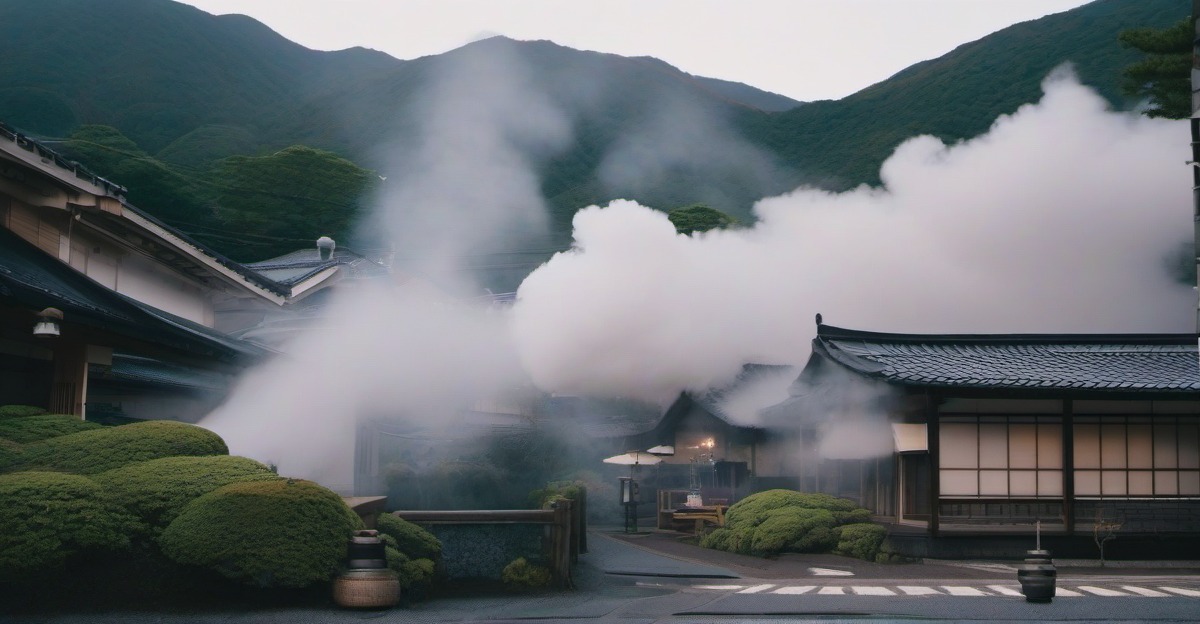
Eight distinct hot spring sources. Sand baths only found here. Steam vents called jigoku that have been drawing visitors since the Edo period.
We earn a commission when you book through our Viator links, at no extra cost to you.
Why Beppu is different from every other onsen town
Beppu sits on the eastern coast of Kyushu in Oita Prefecture and produces more hot spring water than any other city on earth. The official figure: roughly 83,000 liters of onsen water per minute flow out of around 2,800 sources. That volume is what makes Beppu feel less like a single town and more like an industry built around steam.
Walking through Beppu you see steam rising from street drains, sidewalks, and dedicated vent parks. Restaurants cook with geothermal steam (jigoku-mushi). Hotels pipe hot water direct from source to bath. The city does not pretend the thermal activity is scenic. It leans into it.
That is what makes Beppu worth a trip for an international visitor who has already done Tokyo and Hakone. You stop comparing baths and start comparing experiences: a sand bath, a mud bath, a steam-cooked lunch, a walk through the most dramatic of the eight jigoku.
The eight hot spring sources (Beppu Hatto)
Beppu's onsen water is classified into eight named sources, each with a distinct mineral profile, color, and temperature. They are:
- Beppu Onsen (Beppu springs). Sodium chloride, clear water, mild temperature. The classic.
- Myoban Onsen. Sulfur-rich, slightly milky, strong smell. Used historically for skin conditions.
- Kannawa Onsen. Iron-sodium, slightly amber. Anti-inflammatory claims.
- Shibaseki Onsen. Magnesium-rich, warmer, near the steam vents.
- Horita Onsen. Sodium bicarbonate, soft water feel on skin.
- Hamawari Onsen. Sodium chloride, hot, used for circulation.
- Kankaiji Onsen. Coastal location, sulfuric and slightly salty.
- Tsurumi Onsen. Sodium chloride, mildest of the eight.
Day-use bathing passports (Yumeguri) cost 1,500 to 2,500 yen and cover three to four different bath houses across one or two of the districts. If you want to feel the difference between mineral profiles, this is the cheapest comparison. Most public baths and ryokan in Beppu accept tattoos, especially in the Kannawa district.
The jigoku: steam vents you can walk around
The jigoku are hot spring formations too violent to bathe in. Steam vents, mud pots, and geysers where temperatures run from 90 to 150 degrees Celsius. There are seven major jigoku in Beppu, each one themed:
- Umi Jigoku (sea hell). A pool of brilliant cobalt-blue water. Most photographed. Named for the color of the sea.
- Oniishibozu Jigoku (shaven head hell). Bubbling gray mud that looks like the bald head of a monk.
- Shiraike Jigoku (white pond hell). Pale blue-white water, gentle steam.
- Kamado Jigoku (cooking pot hell). Multiple vents, with on-site cooking demos using geothermal steam.
- Chinoike Jigoku (blood pond hell). Vivid red pool of iron-rich mud.
- Oniyama Jigoku (demon mountain hell). Home to roughly 90 crocodiles farmed in geothermal water. Stranger than expected.
- Tatsumaki Jigoku (spout hell). A geyser that erupts every 30 to 40 minutes.
The jigoku-meguri is the standard jigoku tour circuit. A combined ticket for all seven runs about 2,200 yen and includes the oniibo (cooked egg, soft-boiled in the steam). Allow two to three hours for the full loop.
What is a sand bath (suna yu)
The suna yu, a sand bath, is Beppu's signature experience. You lie back on a beach where attendants use wooden shovels to cover your body, except the head, with sand heated by underground steam. The temperature of the sand is about 50 to 55 degrees Celsius. Inside it feels much hotter because the heat packs around your torso and legs.
You stay buried for 10 to 15 minutes. The body sweats heavily in ways a normal bath cannot match. Circulation improves, muscles relax, and you will feel a pleasant heaviness afterward. The experience is followed by a rinse bath and a cooling rest area.
The most foreigner-friendly sand bath is Jigoku Sudori in the Kannawa district. The staff speak enough English to walk you through the steps and the timing. Reservations are recommended for weekends. Cost is about 1,800 yen for the basic 10-minute session.
How to get to Beppu
Beppu is on Kyushu, not reachable as a day trip from Tokyo. The fastest route is fly Tokyo Haneda to Oita Airport (1 hour 20 minutes), then a 40-minute bus to Beppu Station. From Beppu Station the onsen districts are 10 to 20 minutes away by local bus.
The Shinkansen route works if you want the train experience: take the Tokaido Shinkansen to Kokura (about 4 hours 30 minutes), then a 15-minute local train to Beppu. Total: around 5 hours. The Japan Rail Pass covers this.
Once in Beppu, the local bus network covers Kannawa, Myoban, and Hamawari. A two-day bus pass for visitors is about 800 yen.
When to go
Spring (March to May) and autumn (October to November) have the most reliable weather for the jigoku-meguri, which involves outdoor walking. Summer in Beppu is hot and humid but the steam vents keep many areas naturally cooled. Winter rarely drops below freezing and Beppu's outdoor baths stay open year-round.
Avoid Golden Week (late April to early May). Hotel and ryokan prices double, and Beppu is a popular domestic destination.
Book a Beppu onsen experience
Most Beppu onsen experiences combine a sand bath session, a jigoku-meguri tour, and a ryokan stay. Day-trip sand bath experiences start around 6,500 yen with English support. Ryokan plans with dinner and breakfast run from 18,000 to 45,000 yen per person depending on the property and the meal.
Frequently asked
What is Beppu best known for?
Sand baths, the eight hot spring sources (Beppu Hatto), and the seven jigoku steam vents that visitors can walk among. Beppu produces more onsen water than anywhere else in Japan.
Are Beppu onsen tattoo-friendly?
Most are. Tourism is a major part of Beppu's economy, and international visitors are expected. Jigoku Sudori (sand bath) and most public baths in Kannawa accept tattoos.
Can I do Beppu as a day trip?
Yes from Oita, Fukuoka, or Kumamoto. From Tokyo or Kyoto it is a flight. A Beppu day covers one jigoku-meguri loop plus one or two bath stops if you start by 8:30am.
What's the difference between Beppu and Hakone?
Hakone is closer to Tokyo, has Mount Fuji views, and offers a quieter ryokan-centered experience. Beppu is hotter, steamier, and more focused on the variety of bathing experiences themselves. Both are excellent.
Related: Hakone onsen guide · Onsen etiquette for first-timers · Hakone vs Beppu
By Emi Kato, onsen specialist. Twelve years documenting Japan's hot springs from a base in Kyoto. On-site visits across Beppu, Hakone, Tokyo, and Kyoto.
Hakone Luxury Onsen Private Tour
Hakone Luxury Onsen Private Tour offers a relaxing full day journey through Hakone's breathtaking natural landscapes, scenic viewpoints, and authentic Japanese
Check availabilityExplore More
Related guides and comparisons: