Summer Onsen Japan: Why Hot Springs Work in the Heat
We earn a commission when you book through our links on Viator (PID P00299531), at no extra cost to you. This is how we keep the site free. Learn more →
What shapes a visit to Japan
Summer onsen visits are less crowded but can be uncomfortably hot. You can manage heat with timing. You can't do much about a packed bath.
My own onsen stories come from autumn, winter, and early spring, not from July. June is rainy season with fewer crowds. July and August are hot and humid. Summer festivals (matsuri) near onsen towns add cultural value, and I'd sooner plan a trip around a festival than around one particular ryokan.
Conditions shift by region, so check the outlook from the Japan Meteorological Corporation in the week before you travel. For regional transport and route planning, use the Japan National Tourism Organization (JNTO).
One rule applies in every season: if you feel dizzy or nauseous, get out immediately and cool down.
Green Season Snow Monkeys: Baby Monkeys & Scenic Forest Walk: what the itinerary covers
Japan's snow monkeys are famous for a winter image, and the seasonal notes agree that for snow, Nagano is prime. So summer travellers ask whether the trip is still worth making without it. This green-season tour answers that question. It runs in spring, summer, and autumn, pairs the monkeys with a walk through the forest, and is timed around the season when the babies are out.
This tour is not for you if snow is the point. For wider planning in the prefecture, see our Nagano guide.
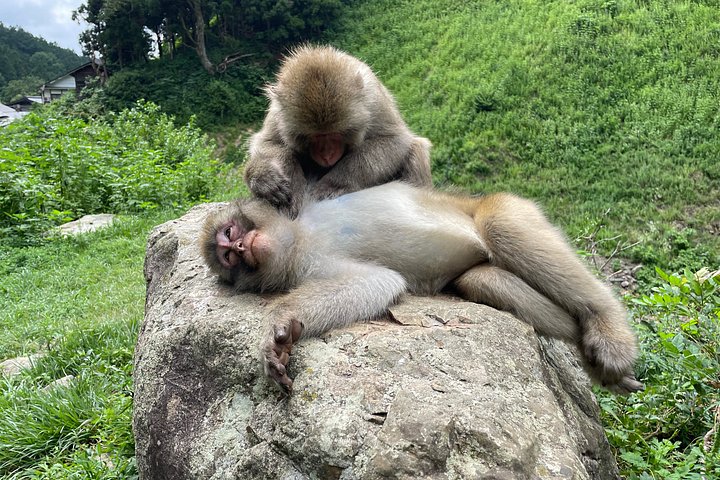
Green Season Snow Monkeys: Baby Monkeys & Scenic Forest Walk
From $87.64 · Price checked: Jul 2026
Best for: Non-winter travelers wanting the snow monkey experience
Not for: Visitors hoping to photograph monkeys bathing in snowy hot springs
Spring/summer/autumn snow monkey tour. Babies visible in May-July.
Check availabilityExternal booking on Viator · pricing and cancellations handled by Viator
Planning onsen in Japan
The moments worth crossing the country for are slow ones: walking between baths in a yukata (the light cotton robe ryokan provide), lying on tatami afterwards, eating an egg cooked in spring water. What they do need in summer is pacing.
Kinosaki Onsen in Hyogo taught me this one October. I checked into the ryokan in the afternoon, changed into the provided yukata, and walked straight back out into the street. Couples, families, and groups of friends were all in yukata too, shuffling between the public baths in wooden geta, and the clicking of geta on pavement became the soundtrack of my evening. The fifth bath was empty by the time I reached it, and the seventh, Satono-yu, had a rotemburo with steam drifting up into the autumn night sky.
Kinosaki is designed around public bath hopping, so pass on the ryokan with a private bath, buy the day pass, and work through several of the sotoyu (the town's public bathhouses). At a ryokan, wear the yukata left side over right, because right over left is for funerals. The Japan Onsen: Official Cultural Tourism Site is a sensible place to compare onsen towns and ryokan types before you commit.
Private Tour to Mt. Fuji and Hakone (Fully Licensed Operator): who this tour suits
For visitors based in Tokyo who can't spare a night, this private tour is an easy way into Hakone's onsen area. A fully licensed operator runs it, and it covers the major highlights without an overnight stay. Whether you see Mount Fuji depends on the weather, so check the Japan Meteorological Corporation forecast the day before and keep your expectations loose in the humid months.
Weekdays are quieter than weekends at most onsen. If you do stay over, check whether the rotemburo (outdoor bath) is private or shared before you book. Reserve any private bath (kashikiri buro) at the same time as the room, not at check-in. Our Hakone guide goes into the area in more depth.
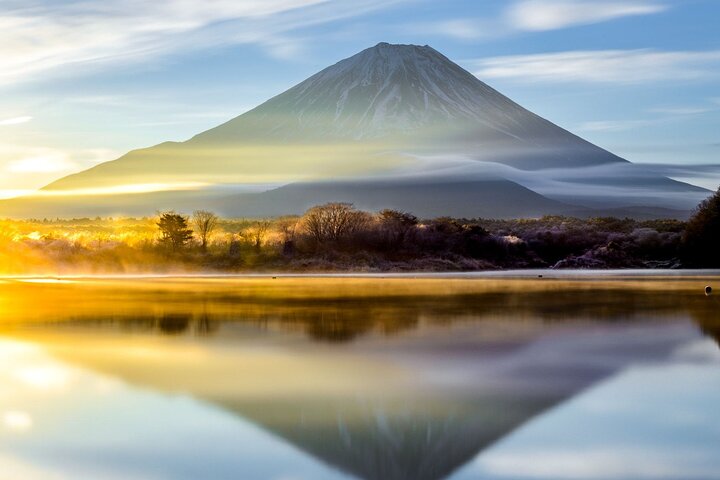
Private Tour to Mt. Fuji and Hakone (Fully Licensed Operator)
From $448.65 · Price checked: Aug 2026
Best for: First-timers and Tokyo day-trippers
Not for: Travelers who like building their own Hakone route at a slower pace
The most accessible Hakone onsen for Tokyo-based visitors. Covers major highlights without overnight stay. Mount Fuji views depend on weather.
Check availabilityExternal booking on Viator · pricing and cancellations handled by Viator
What Surprised Me About Japan
What surprised me was how practical onsen culture is. Steam cooks lunch, churning the hot water is real work, and the "show" turns out to be part of running the bath.
Beppu, in March, showed me the first half of that. Walking through Kannawa, I noticed steam rising from grates in the pavement every few dozen paces. A local man was lowering a metal basket of corn and eggs into one grate on a rope. When he saw me watching, he grinned and said "Jigoku-mushi, hell steamed." I bought onsen tamago from a nearby shop and sat on a low wall eating eggs cooked by the same thermal heat that powers the city. There was no restaurant, no queue, and no charge. Onsen tamago (eggs slow-cooked in hot spring water) are a common snack.
Beppu's public steam vents work as free cooking stations in residential streets. Pick up eggs and vegetables at a supermarket and cook your own. Cooking times vary, so ask a local or copy the person ahead of you. The seasonal notes say Beppu is warmer year-round, which means a summer visit puts you in real heat while you stand over a vent.
Kusatsu Onsen in Gunma, in February, surprised me in a different way. The yumomi performance was listed in every guidebook, so I assumed it would be touristy and skipped it on my first day. On the second day I wandered in late and found women in traditional dress singing a work song in the local dialect while churning scalding water with long wooden paddles. The hall was a working hot-spring room, and the steam was so thick that my glasses fogged instantly. By the end the water was cool enough to touch. I realised the technique was not a performance at all but something still plainly necessary.
Kusatsu's source water is dangerously hot, and that is why yumomi is still needed. Go early in your stay, ideally on the first evening, and arrive ahead of the start for a seat near the front where the steam hits hardest.
Planning the visit well
Go to the rotemburo early in the morning or later in the afternoon to avoid peak crowds. Drink water before and after every bath, and keep each soak short. Most onsen have a rest area with tatami mats and vending machines after bathing. Use it, and don't rush straight back out into the heat.
Look for milk in glass bottles at the vending machines, because drinking one after your bath is a tradition. On a July afternoon, cold milk after hot water makes more sense to me than it ever did in January.
The coin lockers at onsen entrances take coins, so bring change. Carry cash too, because rural onsen may not take credit cards. Bring your own small towel (tenugui). It's for washing, not modesty, since everyone is naked, and rental towel sets don't always include one. At a ryokan, avoid the earliest dinner slot if you want a relaxed bath before your kaiseki, the multi-course evening meal.
If you have tattoos, call ahead or check the website, and don't assume. Before booking a small family-run ryokan, send a polite email asking about their policy. The JNTO page on onsen etiquette and rules covers bathing rules and tattoo policies, and I'd read it before your first bath.
For dates, look to June and to matsuri. Avoid onsen after heavy drinking, because it increases the risk of fainting.
Before you visit
I wish I'd known before my first rural bath that the embarrassing mistakes are the avoidable ones.
My first visit to a rural onsen near Beppu proved it. The curtain colors were hard to read in the dim light and I picked the wrong one. I felt a jolt of panic the moment I stepped through. The attendant redirected me patiently, as though she did this every day. Double-check the curtain color, blue for men and red for women, and ask when in doubt.
Swimwear has no place in an onsen, because you bathe naked. Wash at the washing stations before getting in, sitting on the stool. Keep the small towel on your head or outside the bath, and don't dunk your head underwater, which some onsen prohibit for hygiene. Take off your outdoor shoes before stepping onto tatami. Leave your phone in the locker, since photography inside the bathing area is off limits, and read the posted rules at each new bath.
Smaller onsen may close on one weekday for cleaning, so confirm the schedule before you commit to a Monday or Tuesday. A ryokan with a private onsen may still enforce tattoo rules, and some ask guests to cover up in shared dining areas where other guests can see.
I also wish I'd gone to Kusatsu's yumomi on that first evening. I'd have arrived on time instead of wandering in late with fogged glasses.
Explore More
Related comparisons and guides:
Frequently Asked Questions
Is summer a good time to visit an onsen in Japan?
It suits travellers who want thinner crowds and can pace themselves in humid heat. If your dates match a local matsuri, pair the bath with the festival for the cultural side of the trip.
Can I see Japan's snow monkeys outside winter?
Yes. Green-season tours run in spring, summer, and autumn and include a forest walk. Plan a winter trip instead if you want to see snow on the monkeys' fur.
Is a Hakone day trip from Tokyo enough for an onsen experience?
A private day tour covers the highlights and suits first-timers, but it leaves little room for a long, slow soak. Add a night at a ryokan if the bath matters more to you than the sightseeing.
What should I eat or drink after bathing in summer?
Drink water first, then try bottled milk from the vending machine or a few onsen tamago. Onsen manju (steamed buns) are the classic souvenir from an onsen town, so pick some up on your way out.
Can I use an onsen if I have tattoos?
Policies differ from one property to the next, so contact the onsen or ryokan directly before you go. Bring waterproof cover bandages from home in case a bath asks you to cover up, because the sizes sold in Japanese pharmacies are limited.
Written from Kyoto, Japan.