When you book through our links, we may earn a commission at no extra cost to you. This does not affect our assessments — I only recommend onsen I have visited myself.
A Personal Note
Two Ways to Bathe, Two Different Experiences
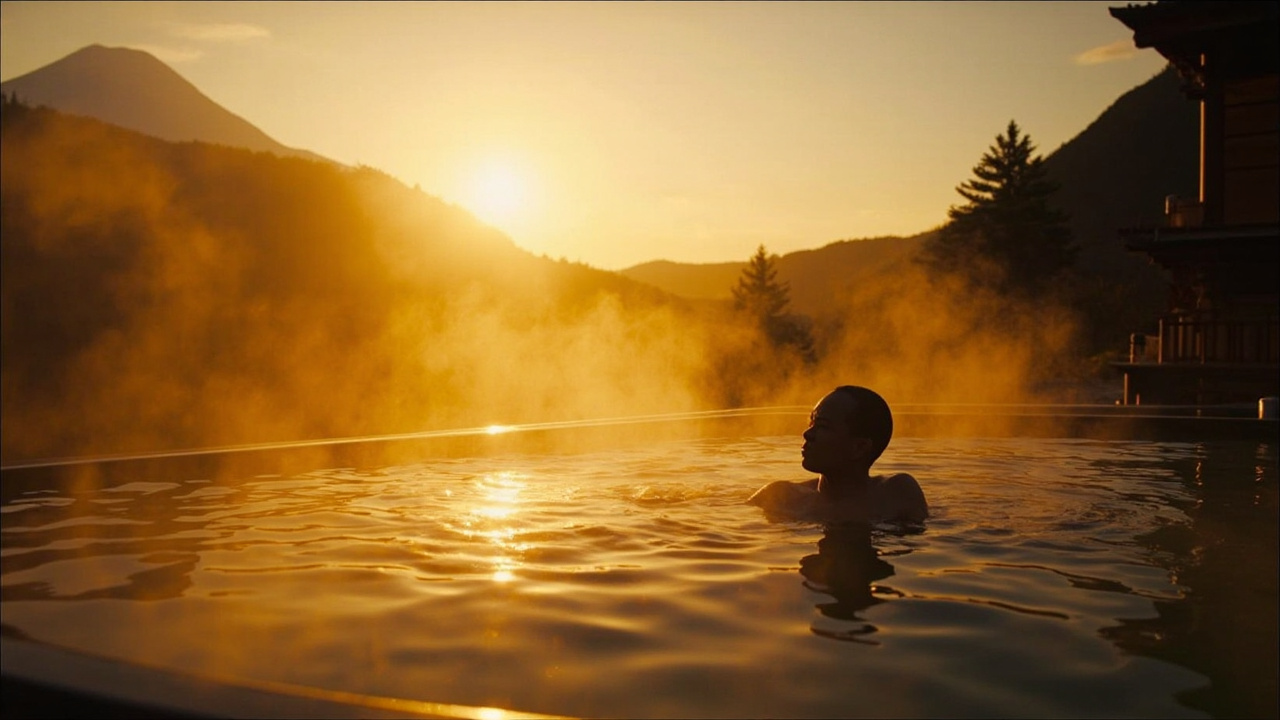
 The first time I used a private onsen, I paid ¥3,000 extra at a ryokan in Hakone because I was travelling with my partner and we wanted to bathe together — something you simply cannot do in a standard public onsen where men and women are separated by blue and red curtains. It was February, the outdoor rotemburo overlooked a cedar forest dusted with snow, and we had the bath entirely to ourselves for 50 minutes. I remember thinking: this is worth every yen.
Three days later, I went to a public sento near Gora — ¥500 entry, a room full of local women of all ages, the quiet sounds of water and wooden buckets. An elderly woman showed me how to adjust the cold water tap when I was struggling, without a word, just a gesture. That moment cost ¥500 and it's stayed with me longer than the private session. Private onsen give you privacy and control. Public onsen give you something harder to describe — the sense that you are participating in a ritual that has been happening in Japan for over a thousand years.
Private Hakone onsen sessions are the simplest way in if you are nervous about shared bathing — and most visitors are, on their first trip. But public baths, once you get past the initial awkwardness, offer something private baths cannot replicate. I use both regularly, and the choice between them depends on your situation, not on one being better than the other.
Side by Side
The Core Difference
Private onsen (kashikiri-buro) are reservable baths for you alone, typically booked in 50-minute slots at ¥2,000-5,000 extra. Public onsen are shared baths open to all guests or visitors, entry ¥400-1,200, with no reservation needed.
| Factor | Private Onsen (Kashikiri-buro) | Public Onsen |
|---|---|---|
| Cost | ¥2,000-5,000 extra per 50-minute slot on top of room rate or entry fee | ¥400-1,200 entry per person. Often free for ryokan guests at their own establishment |
| Who you bathe with | Alone, with your partner, or with family — you control the group | Strangers of the same gender — blue curtain for men, red for women |
| Gender mixing | Allowed — couples and families can bathe together | Strictly separated by gender at nearly all onsen |
| Tattoo policy | No issue — nobody sees you. Sidesteps the tattoo problem entirely | Varies. Commercial complexes often accept tattoos. Traditional ryokan may refuse |
| Time limit | Typically 50 minutes. In-room rotemburo have no limit | No hard limit but 20-30 minutes per session is standard etiquette |
| Reservation needed | Yes — book at check-in or in advance. Popular slots fill up | No — walk in anytime during opening hours |
| Atmosphere | Quiet, private, controlled. Your own space | Communal, social in a quiet way. The sound of water, wooden buckets, soft conversations |
| Cultural immersion | Limited — you miss the shared ritual aspect of Japanese bathing culture | Full — this is how Japanese people have bathed socially for centuries |
| Water quality | Same geothermal source water as public baths at the same ryokan | Same geothermal source water. Water quality is identical between private and public |
| Best for | Couples, tattooed travellers, shy first-timers, special occasions, families | Solo travellers, budget travellers, anyone wanting the cultural experience, onsen enthusiasts |
Compare in Detail
Private vs Public Onsen: Full Comparison
| Factor | Private Onsen | Public Onsen |
|---|---|---|
| Privacy level | Complete — door locks. You, the water, and whoever you invited. Zero strangers | Shared with 2-20+ other bathers of your gender. Eyes-forward etiquette. Nobody stares |
| Typical size | Small — seats 2-4 adults comfortably. In-room rotemburo are larger | Medium to large — seats 5-20 people. Outdoor rotemburo can be substantially larger |
| View quality | Usually faces a garden, forest, or mountain. Best views go to the more expensive rooms | Often positioned for the best views — mountain, ocean, garden. The public rotemburo typically gets the prime spot |
| Booking difficulty | Easy at check-in for most ryokan. Difficult during peak season (Golden Week, autumn foliage, New Year) — book weeks ahead | No booking needed. Walk in. Peak hours (5-8pm) can be crowded at popular onsen |
| In-room option | Yes — some ryokan have private rotemburo attached to guest rooms. These have no time limit | N/A — shared baths are always in a common area |
| Language barrier | Minimal — staff at ryokan with private baths are used to international guests. Some have English booking sheets | Higher — smaller residential sento may have Japanese-only signage and rules. Larger complexes have English |
| Photography allowed | Yes — it's your private space. Many couples take photos in the bath area | No — photography is prohibited inside bathing areas at almost all onsen |
| Seasonal advantage | Peak experience in winter — snow falling while you are in your private rotemburo alone | Consistent year-round. Winter rotemburo with snow is spectacular but you share it |
| Price range (Kyoto/Hakone area) | ¥2,000-5,000 per 50-min (day use). ¥25,000-60,000/night for rooms with in-room rotemburo | ¥400-1,200 per visit. ¥15,000-25,000/night for ryokan with shared onsen |
| Best time of day | Early morning (6-8am) or late evening (8-10pm) — quietest, most atmospheric | Weekday mornings (before 10am) or late evenings (after 8pm) — fewest people |
The Verdict
So Which Should You Choose?
Choose a Private Onsen if:
- You have visible tattoos and do not want to risk being turned away at the door
- You are travelling as a couple and want to bathe together
- You are shy about shared nudity — and that is completely normal for first-timers
- You are celebrating a special occasion (anniversary, honeymoon, milestone birthday)
- You want to take photos during your bath — impossible in public onsen
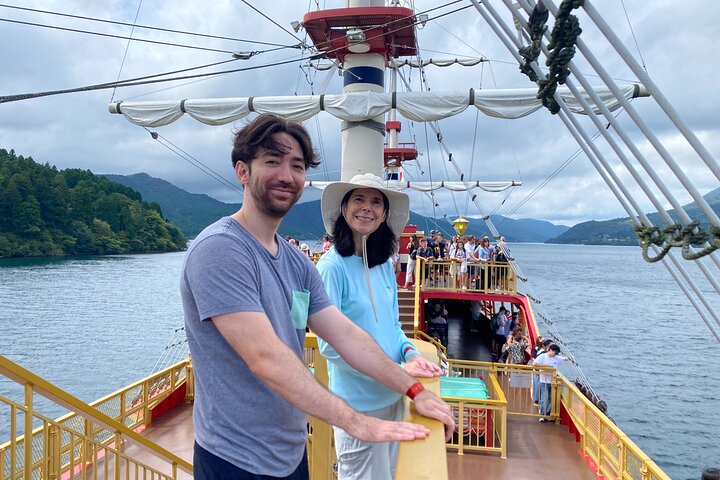
- You want the Hakone Private Onsen Session — flexible 3/4/6-hour private tour with onsen access and a guide who handles all logistics
Choose a Public Onsen if:
- You are comfortable with shared bathing and want the real cultural experience
- You are on a budget — ¥400-1,200 is far cheaper than ¥2,000-5,000 per session
- You are travelling solo and want to observe how Japanese people actually bathe
- You are staying at a ryokan where the public rotemburo has the best view on the property
- You want to bath-hop: visit 3-4 different onsen in one day without reserving anything
- You want the
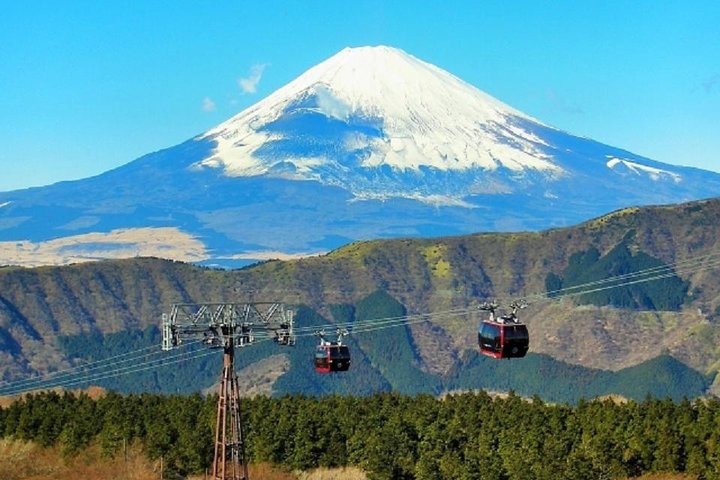 Hakone Ryokan Experience — private rotemburo plus kaiseki dinner and tatami sleeping, giving you both private and public access during your stay
The honest answer
If you are visiting Japan for the first time and are nervous about onsen, start with a private session. Get comfortable with the washing ritual, the water temperature, the feeling of bathing without a swimsuit. Then, on day two or three, try a public onsen. Most first-timers I've talked to who do it this way tell me the private session gave them the confidence to try the public bath — and the public bath ended up being the more memorable experience. If you can only afford one, do public. If you can afford both, use private as your onsen training wheels.
Honest Guidance
Who Should Skip This Comparison
Not every traveller fits neatly into the private-or-public decision. If any of these apply to you, neither option may be what you need.
- If you have a medical condition that makes hot water dangerous — Onsen water is 38-42°C. If you have heart conditions, are pregnant, or have been drinking alcohol, skip the onsen entirely. Both private and public baths carry the same health risks. The dehydration from 15 minutes in 42°C water is real — drink water before and after.
- If you are only in Japan for 3-4 days and staying in central Tokyo — Getting to Hakone for a private onsen session takes 90 minutes each way. That is three hours of travel for a 50-minute bath. Instead, try a tattoo-friendly Tokyo sento — it is public bathing in the city, closer and cheaper.
- If your budget is under ¥2,000 total for onsen — Private onsen are out of reach. Even a single private session costs ¥2,000 minimum. Stick to public sento at ¥400-500 per visit. You can bathe four times for the price of one private session. Some Tokyo sento, like Jakotsuyu in Asakusa, offer a fantastic public bathing experience for ¥460.
- If you specifically want the traditional ryokan experience with kaiseki dinner — The Hakone Ryokan Experience with Private Rotemburo & Kaiseki Dinner bundles both private and public bathing into a full overnight stay. This is the option I recommend if you want to try both — you get the private rotemburo during your reserved slot and access to the shared baths the rest of your stay. The kaiseki dinner alone — 12 courses of seasonal dishes — is half the value.
- If you are a solo traveller who wants to talk to locals — Private onsen are isolating by design. Public onsen, especially smaller residential sento in Beppu or the older districts of Kyoto, are where you might exchange a few words with someone who has been bathing there for forty years. It will not be a deep conversation — onsen are quiet spaces — but the shared experience creates a brief connection that private baths cannot offer.
Start Planning
Browse Private and Public Onsen Options
Private Onsen — Tokyo
Kashikiri-buro booking guide, tattoo-friendly private baths, and couple-friendly options in and around Tokyo.
Explore Private Onsen →Ryokan with Private Onsen
The best ryokan across Japan with in-room rotemburo — what to expect, how to book, and what it costs.
Browse Ryokan →Decision Framework
How to Decide — The Detailed Breakdown
The table above gives you the facts. This section gives you the framework to decide based on your specific situation.
Your Comfort With Shared Nudity
This is the single biggest factor and there is no right answer. Japanese people grow up with communal bathing from childhood — it is completely normalised. Most Western visitors did not, and the idea of bathing naked with strangers is intimidating. I have taken friends to onsen who were visibly nervous in the changing room — and every single one of them told me afterwards that it was far less awkward than they expected. The key realisation: nobody is looking at you. Everyone is focused on their own bathing. If the nudity barrier feels too high on your first trip, book a private onsen. It removes the anxiety entirely and lets you experience the bathing ritual without the social pressure. If you are willing to push through the initial discomfort, public onsen reward you with something private baths cannot offer.
Tattoos
This is the most practical reason to choose private. If you have visible tattoos — sleeves, back pieces, chest work — a private onsen guarantees you access without the anxiety of being turned away at reception. I have been refused entry at two traditional ryokan in Kyoto because of a small wrist tattoo that I had forgotten to cover. At both places, the staff were polite but firm. Ten minutes later, I was in a private kashikiri-buro at the third ryokan I tried, and nobody mentioned the tattoo. The private bath sidesteps the issue entirely. Public onsen policies are changing — commercial complexes in Tokyo and Hakone are increasingly tattoo-friendly — but the patchwork of policies means you are always rolling the dice. If you cannot risk being turned away, book private.
Travelling as a Couple
Public onsen separate you by gender — blue curtain for men, red for women. You will bathe apart, meet in the lobby afterwards, and compare notes. For some couples, this is fine. For others — especially on a honeymoon or anniversary trip — the whole point is to share the experience. Private onsen allow mixed-gender bathing with your partner. The 50-minute slot goes quickly, and there is something about sitting in hot water with someone you love, snow falling on the trees outside, that public bathing cannot replicate. If onsen is a shared experience you want to have together, pay the private premium.
Budget Reality
Let me be direct: the price difference is substantial relative to what you get. A public sento in Beppu costs ¥400. A private session at the same ryokan costs ¥3,000. For that ¥2,600 difference you get privacy and control — not better water, not a better view, not a longer session. The water is identical. If you are on a 14-day Japan trip and onsen is one activity among many, the public option is the better financial choice — you can bathe 7 times for the price of one private session. If this is a once-in-a-lifetime trip and onsen is a highlight, the private premium is worth it for the experience you want. I have done both at different points in my life and neither decision was wrong — they served different priorities.
The Hybrid Approach — Do Both
The strategy I recommend most often: book one private session on your first day, then use public baths for the rest of your trip. The private session teaches you the mechanics — the washing ritual, the towel etiquette, the water temperature, the feeling of bathing without a swimsuit — in a pressure-free environment. By the time you walk into your first public sento, you know exactly what to do. I did this with my sister when she visited Japan in 2019. She was terrified of public bathing. We booked a private onsen in Hakone on day one. By day three she was confidently walking into a residential sento in Beppu on her own. The private session was her training wheels — and then she did not need them anymore.
Questions
Private vs Public Onsen — FAQ
No — most public onsen separate bathers by gender, with blue curtains for men and red for women. Mixed-gender public onsen (konyoku) are extremely rare and mostly exist in remote mountain areas. If you want to bathe with your partner, you need a private onsen (kashikiri-buro).
Yes — private onsen use the same geothermal water from the same source as public baths in the same establishment. The water quality, mineral content, and temperature are identical. The only difference is the setting and privacy.
Yes — private onsen sidestep the tattoo issue entirely because nobody else sees you. A ryokan that restricts visible tattoos in its shared baths will still allow you to use a private kashikiri-buro without issue. This is the single biggest reason many tattooed travellers book private onsen.
Most private onsen (kashikiri-buro) book in 50-minute slots. Some ryokan allow 90-minute sessions for a higher fee. In-room private rotemburo have no time limit — you can bathe as often and as long as you want during your stay. Public onsen typically have no hard time limit but 20-30 minutes per session is standard etiquette.
If your total onsen budget is under ¥2,000, private onsen are out of reach — stick to public sento at ¥400-500 per visit. If you can stretch to ¥3,000-5,000 for one session, a single private onsen on your first day gives you the confidence to use public baths for the rest of your trip. The value is in the training-wheels effect, not the bath itself.
Yes — since the space is exclusively yours, photography is allowed in private onsen. Many couples take photos during their session. In public onsen, photography is strictly prohibited inside the bathing area at almost all establishments.
The initial discomfort is normal and typically passes within minutes. Focus on the washing ritual first — it gives you something to do and a routine to follow. By the time you enter the bath, you will have already been naked at the washing station for several minutes. If the discomfort does not pass, you can leave — nobody will comment or notice. The standard etiquette is to rinse off and exit quietly. If you anticipate significant anxiety, book a private onsen instead.
Explore More
Related guides and comparisons:
Emi Kato
Japanese onsen specialist · 200+ onsen visited · 12 years in Japan
Last updated: June 2026
Written by Emi Kato — Japan travel and onsen specialist; based in Kyoto. Twelve years documenting Japan's hot spring culture for international visitors. Last reviewed June 2026.
When you book through our links, we may earn a commission at no extra cost to you.