When you book through our links, we may earn a commission at no extra cost to you. This does not affect our assessments — I only recommend ryokan and onsen I have visited myself.
A Personal Note
Futon or Bed — The Question Behind the Question
 I have stayed at over forty ryokan across Japan — from a ¥12,000 family-run inn in Beppu where the owner's grandmother still managed the front desk, to a ¥80,000 luxury ryokan in Hakone with an in-room rotemburo and a personal attendant who appeared exactly when I needed her and vanished the rest of the time. I have also checked into dozens of Western-style hotels that happen to have onsen on the top floor. The question is not which is better. The question is which fits your trip, your comfort level, and your expectations.
My first ryokan stay, in 2014, was at a modest place near Gora in Hakone. I checked in at 3pm sharp — they do not appreciate early arrivals — was handed a yukata, shown to a tatami room with nothing but a low table, two floor cushions, and a scroll hanging in the alcove. At 6pm a woman in a kimono arrived with the first course of kaiseki dinner. At 7:30pm, while I was still at the table, I heard a soft knock and the futon was laid out in the adjacent room without me noticing. By 10am the next morning I was checked out. The entire experience was structured, traditional, and completely unlike any hotel stay I had ever had. I loved it — and I understood instantly why some people would hate it.
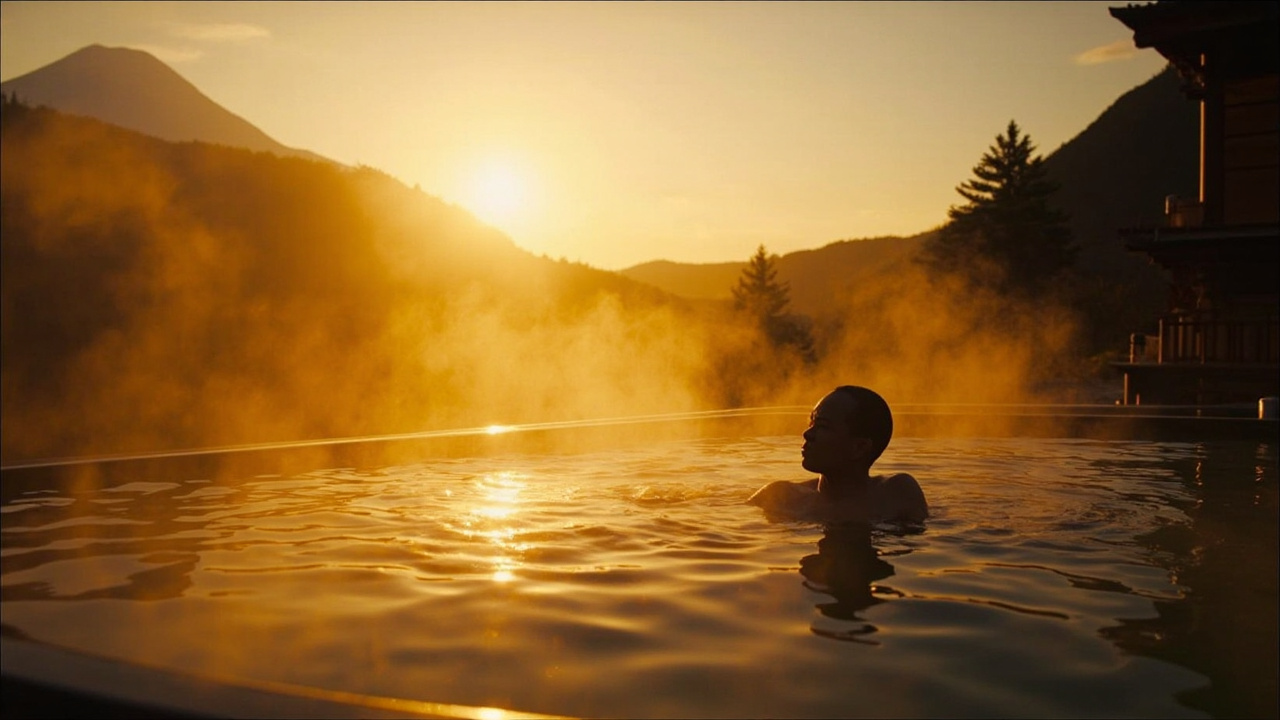
The Hakone Ryokan Experience is the one I recommend for first-timers — it includes a private rotemburo session, the full kaiseki dinner, and tatami sleeping, without the intimidating aspects of a completely traditional ryokan where you might feel lost. It is the ryokan experience with training wheels, and it is the right starting point if you have never done this before.
Side by Side
The Core Difference
A ryokan is a traditional Japanese inn — it is an experience, not just accommodation. A hotel with onsen is Western-style lodging where the onsen is a facility, like a gym or a pool. The ryokan shapes your entire stay. The hotel lets you shape your own.
| Factor | Ryokan | Hotel with Onsen |
|---|---|---|
| Sleeping | Futon on tatami mats. Staff lay it out during dinner. Firm — some people find it uncomfortable | Western-style bed. Familiar, comfortable, no surprises |
| Meals | Kaiseki dinner (8-12 courses) included in room rate. Set time — typically 6pm or 7pm | Restaurant, buffet, or eat outside. Flexible timing. Not included unless specified |
| Check-in / Check-out | 3pm check-in, 10am check-out. Strict — do not arrive early | Typically 3pm check-in, 11am check-out. More flexible |
| Staff presence | High — personal attendant (nakai-san), staff enter your room to set up futon | Standard hotel service — staff only enter when requested |
| Clothing | Yukata provided — worn around the property, to dinner, and to the bath | Your own clothes. Yukata may be provided but are optional |
| Price per night | ¥15,000-80,000+ per person, dinner and breakfast usually included | ¥10,000-30,000 per room, meals usually separate |
| Onsen access | Shared baths for guests. Private rotemburo available at higher-tier rooms | Onsen floor or wing — shared, often with city views. Fewer private options |
| Tattoo policy | Traditional ryokan with shared baths may restrict visible tattoos. Call ahead | Commercial hotel onsen complexes are generally more accepting |
| Atmosphere | Quiet, ritualised, traditional. You follow the ryokan's rhythm | Flexible, familiar, international. You set your own schedule |
| Best for | Cultural travellers, special occasions, couples seeking the traditional experience | Families, business travellers, first-time Japan visitors who want flexibility |
Compare in Detail
Ryokan vs Hotel Onsen: Full Comparison
| Factor | Ryokan | Hotel with Onsen |
|---|---|---|
| Room layout | Tatami mats throughout. Low table with floor cushions by day, futon laid out at night. Tokonoma alcove with seasonal scroll and flower arrangement | Standard hotel room: bed, desk, chair, TV. Onsen is in a separate area — your room is just a room |
| Bathroom in room | Small — often just a toilet and sink. You bathe in the onsen, not in your room. Some luxury ryokan have in-room rotemburo | Standard private bathroom with shower and tub. Onsen is an additional facility |
| The kaiseki dinner | 8-12 small courses: sashimi, simmered dish, grilled fish, tempura, rice, miso soup, pickles, dessert. Served in your room or a private dining room. Takes 90-120 minutes. Seasonal, local ingredients. This is half the value of the stay | N/A — eat wherever you want. The hotel may have a restaurant but it is not part of the room experience |
| Breakfast | Traditional Japanese breakfast: grilled fish, rice, miso soup, pickles, tamagoyaki, nori. Served at a set time, usually 7:30am or 8am | Buffet or à la carte. Western and Japanese options. Flexible hours |
| Shoes | Remove at the entrance. Slippers provided. No shoes on tatami — ever. Different slippers for the toilet area | Keep your shoes on in common areas. Remove in your room if you prefer — no strict rule |
| Onsen hours | Typically 6am-10pm. Gender-separated. The bath may close for cleaning mid-afternoon (check at check-in) | Often longer hours — some hotel onsen floors operate until midnight or 1am. 24-hour onsen at a few large complexes |
| Language barrier | Higher — traditional ryokan may have Japanese-only explanations, menus, and bath rules. English-speaking staff not guaranteed | Lower — hotel chains have English signage, multi-language check-in, and international staff |
| Room service | N/A — the kaiseki dinner is the meal service. No 24-hour room service menu | Standard hotel room service — available at most mid-range and above hotels |
| WiFi | Available at most ryokan now, but older properties may have weak signals in remote areas | Standard hotel WiFi — generally reliable |
| Cancellation policy | Strict — often 3-7 days. Some ryokan charge 50-100% for late cancellations because they prepare food per guest | Standard hotel policy — typically 24-48 hours. More flexible |
| Peak season availability | Books out 2-3 months ahead during Golden Week, autumn foliage, and New Year. Limited rooms — 10-20 at most ryokan | Larger inventory — hundreds of rooms. More likely to have availability even during peak |
| Typical locations | Onsen towns (Hakone, Beppu, Kurokawa, Kusatsu), rural areas, historic districts of Kyoto | Onsen towns, major cities (Tokyo, Osaka), near train stations, resort areas |
The Verdict
So Which Should You Choose?
Choose a Ryokan if:
- You want the experience, not just a place to sleep — the kaiseki dinner alone is worth the stay if you care about food
- You are celebrating something — anniversary, honeymoon, milestone birthday
- You are comfortable with structure: set meal times, set check-out, staff in your space
- You want to sleep on a futon on tatami — it is part of the experience, not a downgrade
- You want to wander the property in a yukata, from room to bath to dinner, without changing
- The Hakone Ryokan Experience — private rotemburo, kaiseki dinner, tatami sleeping — is the exact thing you have been imagining
Choose a Hotel with Onsen if:
- You want the onsen experience without committing to the full ryokan structure
- You are travelling with young children who need flexibility (and who will not sit through a 90-minute kaiseki dinner)
- You have back issues — a futon on the floor is not for everyone and ryokan do not have beds
- You want to eat when and where you choose, not when the ryokan schedules you
- You value privacy — hotel staff do not enter your room while you are at dinner to lay out bedding
- You want the
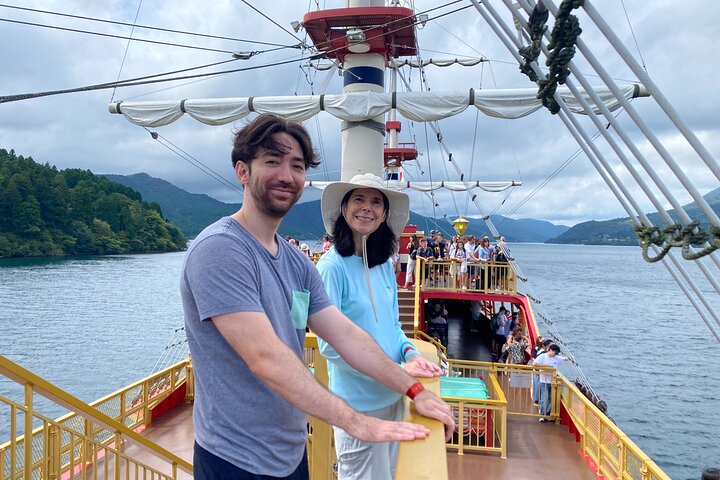 Hakone Private Onsen Session as a day trip while staying at a hotel — flexible 3/4/6-hour private tour with a guide who handles logistics
The honest answer
A ryokan is a commitment. You show up at 3pm, eat when they tell you, sleep on the floor, and leave by 10am. It is wonderful — the kaiseki dinner is often the best meal of a Japan trip, the rotemburo at dawn with nobody else around is special, and the yukata-on-tatami aesthetic is exactly what you have seen in photographs. It is also not for everyone. If you chafe at structure, value privacy, or have a bad back, book a hotel with onsen and do a private onsen session as a day trip. You will get 80% of the bathing experience with none of the constraints. I have done both dozens of times and neither decision is wrong — they serve different travellers at different moments.
Honest Guidance
When Neither Option Is Right
Not every onsen-seeking traveller fits neatly into the ryokan-or-hotel decision. If any of the following apply to you, consider a third path.
- If you are only in Japan for 5-7 days and staying in Tokyo — Travelling to Hakone for a ryokan stay takes 90 minutes each way plus the overnight commitment. That is two half-days of a short trip. Do a day-trip onsen instead — the Hakone Private Onsen Session gets you the bathing experience without the overnight cost, or try a Tokyo sento for ¥460.
- If you have a serious back condition or mobility issues — Ryokan futons are thin, firm, and on the floor. Getting up from floor-level requires mobility that some visitors do not have. Tatami rooms have no chairs — you sit on floor cushions. If sitting on the floor for 90 minutes during kaiseki dinner sounds painful, skip the ryokan. Hotels offer beds, chairs, and accessibility features that ryokan typically do not.
- If you are on a strict backpacker budget (under ¥8,000/night) — Ryokan are out of reach. Even budget ryokan start at ¥12,000-15,000 per person. Hotels with onsen in onsen towns start at ¥10,000. Instead, stay at a budget business hotel and use public sento or day-use onsen (hi-gaeri, ¥800-2,000) for bathing. You can have the onsen experience without paying for accommodation you cannot afford.
- If you specifically want a ryokan with a private onsen but cannot afford ¥25,000+/night — In-room rotemburo are expensive. The alternative: book a standard ryokan room (¥15,000/night) and reserve a kashikiri-buro (private reservable bath, ¥2,000-5,000 for 50 minutes). You get the ryokan experience plus one private bath session for around ¥18,000 total — far less than a room with an in-room rotemburo. Reserve the private bath at check-in before slots fill up.
- If you are a solo traveller who wants to socialise — Ryokan can be isolating for solo travellers. Dinner is often served in your room or a private dining space. The onsen is quiet. Hotels have bars, lounges, and common areas where meeting other travellers is more natural. If you are travelling alone and want the possibility of conversation, a hotel with onsen gives you that — the onsen floor at night and the breakfast buffet are both spaces where solo travellers naturally interact.
Start Planning
Browse Ryokan and Hotel Onsen Options
Ryokan with Private Onsen
In-room rotemburo, kaiseki dinner, tatami sleeping — the best ryokan across Japan with private baths.
Browse Ryokan →Hakone — Japan's Ryokan Capital
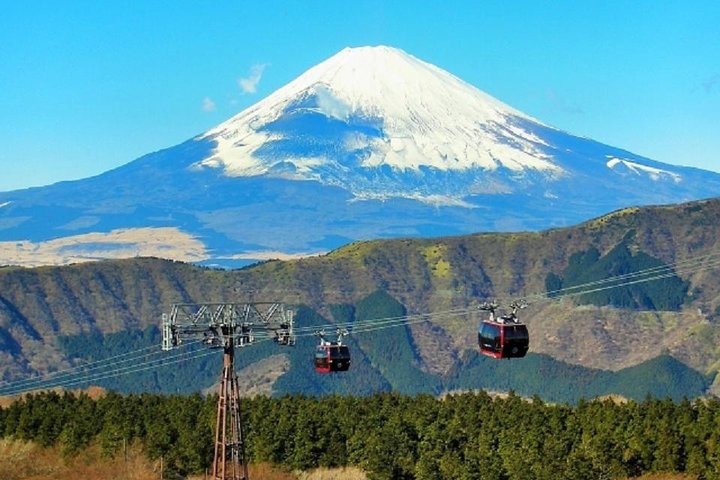
The highest concentration of ryokan near Tokyo. Mount Fuji views from outdoor baths, 90 minutes from Shinjuku.
Explore Hakone →Decision Framework
How to Decide — The Detailed Breakdown
The comparison table gives you the facts. These are the questions that will tell you which one fits your trip.
How Important Is Food to Your Trip?
This is the single biggest differentiator. Kaiseki dinner is not a meal — it is a multi-course progression of seasonal, local ingredients prepared with extraordinary care. Sashimi that was swimming that morning, a simmered dish that has been reducing for hours, tempura fried moments before it reaches your table, twelve tiny courses arriving one by one on lacquer trays. If you care about food, a ryokan stay is worth it for the dinner alone — the kaiseki at a good ryokan is often the best meal of a Japan trip. If food is fuel to you and you would rather grab ramen and keep exploring, the ryokan premium is wasted. Book a hotel with onsen and use the money you save on the room for better meals elsewhere.
Your Tolerance for Structure
A ryokan runs on a schedule that you do not control. Check-in is at 3pm — not 1pm, not 2:30pm. Dinner is at 6pm or 6:30pm — you choose the time at check-in but cannot change it later. Breakfast is at 7:30am or 8am. Check-out is 10am. If the idea of someone else setting your meal times irritates you, a ryokan will frustrate you. If you find the structure relaxing — someone else making all the decisions while you just enjoy — a ryokan is a relief. I am the second type. My partner is the first. We do ryokan when I plan the trip and hotels when she does.
The Futon Question
Japanese futons are not Western futons — they are thinner, firmer, and placed directly on tatami mats on the floor. Some people sleep better on them than on any bed. Others wake up with back pain. A friend of mine, a fit 35-year-old, spent two nights at a ryokan in Kyoto and told me afterwards that his back hurt for three days. I sleep fine on futons but I have been doing it for twelve years. If you have never slept on a futon before, a one-night ryokan stay is a safe test — if it does not work, you are only uncomfortable for one night. If you have existing back issues, do not risk it. Book a hotel.
Budget Reality — It Is Not as Simple as Room Rate
A ryokan at ¥18,000/night including dinner and breakfast costs less than a ¥12,000 hotel room plus two restaurant meals at ¥4,000 each. The ryokan price includes a kaiseki dinner that would cost ¥8,000-12,000 as a standalone restaurant meal. When comparing prices, factor in the included meals — the ryokan premium shrinks considerably. A ¥15,000 ryokan with dinner and breakfast included versus a ¥10,000 hotel where you spend ¥6,000 on two meals: the ryokan is actually cheaper. The price comparison is misleading unless you account for what is bundled. That said, if you would rather eat at local restaurants of your choosing, the bundled meals have no value to you and the hotel is the better financial choice.
The Hybrid Approach — One Night in Each
On a trip of 5+ days to an onsen area, the strategy I recommend most often: one night at a ryokan, the rest at a hotel with onsen. The ryokan night gives you the experience — the kaiseki dinner, the futon sleeping, the early morning rotemburo, the yukata drifting through the corridors. One night is enough to understand it. Then switch to a hotel for the remaining nights — you get the onsen access, the Western bed, the flexible schedule, and the lower nightly rate. I did exactly this on a trip to Hakone in 2019: one night at a ryokan near Gora (¥22,000, worth every yen), then two nights at a hotel with onsen (¥12,000/night). The combination gave me the best of both without the ryokan fatigue that sets in around night two.
Questions
Ryokan vs Hotel with Onsen — FAQ
A ryokan is a traditional Japanese inn where you sleep on a futon on tatami mats, eat a multi-course kaiseki dinner at a set time, and follow the ryokan's rhythm. A hotel with onsen is a Western-style hotel that has onsen facilities — you sleep in a bed, eat when you want, and come and go freely. The ryokan is an experience. The hotel is accommodation with a bath.
If you value the kaiseki dinner — 8-12 courses of seasonal Japanese cuisine worth ¥5,000-8,000 as a standalone meal — then yes, the price premium is justified. A ¥15,000 ryokan including dinner and breakfast costs less than a ¥10,000 hotel room plus two restaurant meals. Factor in the included meals when comparing prices. If food is not a priority and you would rather eat at local restaurants, the hotel is the better financial choice.
It depends. Hotels in onsen towns like Hakone and Beppu typically have real geothermal water piped from local sources — look for the term 天然温泉 (tennen onsen, natural hot spring). Hotels in central Tokyo or Osaka that advertise 'onsen' usually have heated tap water (sento-style). If natural hot spring water matters to you, check the hotel's Japanese website for 天然温泉.
Yes — this is standard procedure at traditional ryokan. While you are at dinner (typically 6-7:30pm), staff enter your room, clear the tea table, and lay out your futon on the tatami. This surprises many first-time visitors. It is not invasive — it has been done this way for generations and is part of the ryokan service ritual. If you are uncomfortable with staff in your room, leave valuables in the in-room safe or at the front desk.
Hotels with onsen are generally more practical for families with young children. Ryokan have set meal times, quiet-atmosphere expectations, and futons that young children may find uncomfortable. Hotels offer flexibility — eat when you want, come and go freely, use the onsen when it suits you. For families with teenagers or adult children who can appreciate the cultural experience, a ryokan can be a trip highlight.
Yes — wearing the provided yukata to dinner is expected at most ryokan. It is part of the experience. Some higher-end ryokan provide a nicer yukata for dinner. Wear it left side over right — right over left is how the deceased are dressed for funerals. The ryokan staff will correct you if you get it wrong, but knowing this in advance avoids the awkward moment.
Inform the ryokan when you book — not at check-in. Kaiseki dinner is prepared per guest and substitutions require advance notice. Most ryokan can accommodate vegetarian, no-pork, and no-shellfish requests if given 3-7 days notice. Vegan, gluten-free, and severe allergies are harder — call or email before booking to confirm. Some traditional ryokan may not be able to accommodate complex dietary needs. Hotels with onsen offer more flexibility — you can eat what you want, where you want.
Explore More
Related guides and comparisons:
Emi Kato
Japanese onsen specialist · 200+ onsen visited · 40+ ryokan stays · 12 years in Japan
Last updated: June 2026
Written by Emi Kato — Japan travel and onsen specialist; based in Kyoto. Twelve years documenting Japan's hot spring culture for international visitors. Last reviewed June 2026.
When you book through our links, we may earn a commission at no extra cost to you.