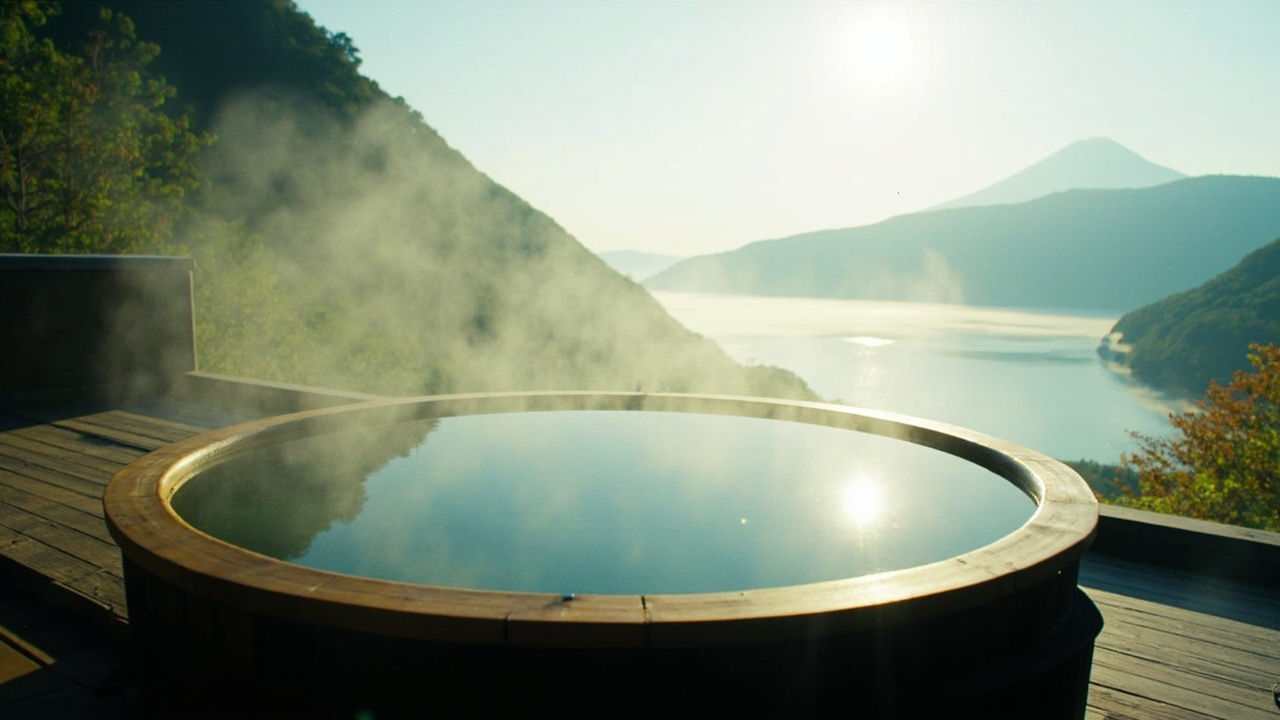
I Remember My First Ryokan Experience — Here's What I Wish I'd Known
Golden Week 2019. I thought I was clever — visiting Hakone on May 4th, after the peak rush. I was wrong. Every ryokan I wanted was booked solid. I ended up at a small sento near Gora station, a cedar-lined indoor bath with nothing special on paper. But I sat in the 40°C water for two hours, watching the light shift from sharp white to amber to a soft dusty pink as the sun dropped behind the ridge. That was the moment I understood: the ryokan is the destination, not the sights around it.
I have stayed at 40+ ryokan across Japan since then — from budget minshuku in Beppu to high-end places in Hakone with private rotemburo. Here is what nobody tells you before your first booking. No fluff. Just the real details: the futon timing, the kaiseki pressure, the yukata rules, and the awkwardness of staff entering your room while you are at dinner.
Hakone Ryokan Experience — Private Rotemburo & Kaiseki Dinner — Perfect for First-Timers
If you want the full package without the guesswork, I booked the Hakone Ryokan Experience with Private Rotemburo & Kaiseki Dinner on a return trip in 2022. It includes the full Japanese bathing ritual — outdoor rotemburo, multi-course kaiseki dinner, tatami sleeping. The private outdoor bath option is worth the extra cost if you have tattoos or just want privacy. My only complaint: the dinner slot was 6 PM, which meant I had to rush my afternoon bath. If I go again, I would ask for the 7:30 PM seating.
Hakone Ryokan Experience — Private Rotemburo & Kaiseki Dinner
Full Japanese bathing ritual — outdoor rotemburo, multi-course kaiseki dinner, tatami sleeping. Private outdoor bath option. Best for overnight stays and special occasions. Pro: everything handled for you. Con: dinner timing is fixed, so plan your bath schedule around it.
Check Availability →Finding Your Feet: Where to Start in Japan
For your first ryokan stay, start close to Tokyo. Hakone is the obvious choice — 90 minutes from Shinjuku by Odakyu Line, well-connected, and the ryokan density is high enough that you have options. I made every mistake you can make on my first Hakone trip: washed my hair at the wrong faucet, nearly walked into the wrong gender area, stayed in too long and had to lie on the bench like a beaked seal. It happens. You learn.
One ryokan near Gora posted a handwritten sign in Japanese that said, roughly, "Queue estimated at two hours — please do not ask." That was during autumn foliage season. Book ahead. For weekdays outside peak seasons, most ryokan are fine with 2-3 weeks notice. For cherry blossom (March-April) or autumn foliage (October-November), book 4-6 weeks ahead minimum.
Another option if you want a day trip with guaranteed onsen access: I took the Hakone Private Onsen Session — Custom Tour 3/4/6 Hours with a friend last year. Flexible duration, private guide, and they handle the booking logistics. It is the easiest way in if you are nervous about navigating Japanese-only reservation systems.
Hakone Private Onsen Session — Custom Tour 3/4/6 Hours
Private customizable Hakone tour with onsen access. Flexible duration, private guide. Best for couples and privacy seekers. Pro: no language barrier. Con: costs more than booking direct, but the convenience is worth it for first-timers.
Check Availability →What Nobody Tells You Before Your First Ryokan Trip
Let me walk you through the real experience. Check-in is typically 3 PM, check-out 10 AM. That 19-hour window is packed with ritual. You will be handed a yukata — the light cotton kimono — when you arrive. Wear it left side over right. Right over left is for funerals. I learned this the hard way at a rural onsen near Beppu when an elderly guest corrected me with a gentle but firm tap on my shoulder.
Kaiseki dinner is the multi-course traditional meal served at ryokan. It is not optional — at most places, dinner is included and served in your room or a private dining area. The Kaiseki Dinner Surprise I had near Gora in autumn was twelve tiny dishes arriving one by one, each on lacquer trays. Flavors I could not identify but loved. Do not skip dinner to save money — it is half the value of the stay.
While you are at dinner, staff will enter your room and lay out your futon on the tatami. This feels strange the first time. You leave for dinner with the room in sitting configuration — low table, zabuton cushions, tea set — and return to find the table pushed aside, futon laid out, pajamas folded on top, a glass of water on the bedside tray. It is efficient and slightly unsettling the first night.
Breakfast is served in-room at a specific time you must agree to at check-in. They will ask: "What time would you like breakfast?" If you say 7:30, a staff member will knock at 7:28. If you say 8:00, they arrive at 7:58. They are precise about timing — plan accordingly.
Private onsen (kashikiri-buro) at ryokan typically book in 50-minute slots and cost 2000-5000 yen extra. Book your slot at check-in, not later. The good slots — sunset, early morning — go fast. Do not book the earliest dinner slot if you want a relaxed bath first. I learned this the hard way: I booked 6 PM dinner and my private onsen slot was 4:30 PM. I had to rush through the rotemburo to make dinner on time, and the bath felt rushed.
Tipping is not practiced at Japanese onsen or ryokan. Do not leave money on the pillow or hand cash to staff. It creates awkwardness. The service is included in the price — do not tip.
Most onsen close by 9 PM or 10 PM. If you arrive late, you miss the bath. Plan your travel accordingly. The exception is Thermae-Yu in Shinjuku, which is open until 1 AM (last entry 12 AM) and has a tattoo section. I landed at Narita at 9 PM last November, reached Shinjuku at 11:30 PM, and soaked in the rooftop rotemburo at midnight — 42°C water, 6°C air, Tokyo skyline lit up. A salaryman next to me fell asleep sitting upright on the underwater bench. Staff woke him gently at 12:45 AM.
Tattoo policies vary wildly. At a Shinjuku sento on a weekday evening, the attendant gave me a sharp glance and pointed at the door. No English, no explanation. I walked ten minutes to another sento and was welcomed warmly. Always have a backup. Some sento in Tokyo are tattoo-friendly despite ryokan in the same area not being. If you have tattoos, call ahead or check the website — do not assume — always confirm in advance.
The small towel (tenugui) provided is for washing, not for modesty. Everyone is naked in the bath. You sit at the washing station, scrub with the towel, rinse, then enter the bath. Do not put the towel in the bath water — keep it on your head or outside. Do not dunk your head underwater — some onsen prohibit this for hygiene. Drink water before and after bathing — onsen can dehydrate you quickly. Most onsen sell milk in glass bottles at the vending machines. It is a tradition. Buy on
If you feel dizzy or nauseous, get out immediately and cool down. Avoid onsen after heavy drinking — it increases risk of fainting. Stay in the bath for no more than 15-20 minutes at a time. Take breaks. Use the rest area — do not rush out after bathing.
One more thing: the coin lockers at onsen entrances require 100 yen coins. Bring change. Many rural onsen do not accept credit cards — bring cash.
What I Wish I'd Known Before I Went
Here is the honest list, in no particular order, from 12 years of making these mistakes so you do not have to.
Book ryokan ahead during holidays. Golden Week 2019 taught me this. The best experiences sometimes come from unplanned sento visits — like that cedar-lined bath in Hakone — but if you want a specific ryokan, book 4-6 weeks ahead for peak seasons.
Winter rotemburo is worth the cold. In Nagano, February, I sat in 42°C water while snow fell around me. Snowflakes melted on my shoulders. Steam rose into -5°C air. Monkeys watched from rocks. The contrast between freezing air and hot water is the peak onsen experience. Bring a warm hat for the walk between indoor and outdoor baths.
Always double-check the curtain color. Blue for men, red for women. In dim light at a rural onsen near Beppu, I nearly walked into the wrong gender area. The attendant redirected me patiently. When in doubt, ask.
Sand baths are real and weird. In Beppu, I tried the sand bath on a summer afternoon. The weight of hot volcanic sand pressing down, steam rising from black grains, the odd feeling of being buried alive comfortably. Sand baths feel claustrophobic at first but are uniquely relaxing — and Beppu does them better than anywhere else in Japan.
Kyoto's best onsen are outside central Kyoto. I did the Arashiyama morning ritual at 7 AM on a weekday. Mist rising from the river, bamboo forest visible through the outdoor bath fence, temple bell in the distance. Arashiyama and Kurama are where the real baths are. Check our Kyoto onsen guide for specifics.
Snow monkeys do not care about your camera. At Jigokudani Monkey Park in Nagano, the monkeys ignore humans completely. Steam rising from red monkey faces, the surreal sight of wild animals enjoying the same bath culture. Book the 9 AM entry — the monkeys are in the water the longest during cold mornings.
Bad weather at Hakone is an excuse to spend more time in the baths. I arrived in Hakone at 10 AM on a Tuesday in heavy June rain. The outdoor sights were pointless — visibility was maybe 50 metres from the ropeway. I went to a small sento near Gora station instead. Only three other people. The rain on the tin roof was loud and steady. Spent two hours there and it was better than any clear-day ropeway ride. The outdoor sights will still be there tomorrow.
Beppu's steam vents are free public cooking stations. A local woman handed me a wire basket with two eggs and a sweet potato. She pointed at a steam vent in the pavement, hissing at 100°C. I lowered the basket in, waited 12 minutes, and pulled out perfectly cooked onsen tamago. The sweet potato took 30 minutes. She charged me ¥300 and told me the vent has been used this way since the Edo period. Times vary by vent — ask a local.
If an onsen's online system uses Japanese-only booking, email the ryokan directly in English. Most reply within 48 hours with a reservation. I have done this for ryokan in Hakone, Beppu, and Nagano. It works.
Buy the Hakone Free Pass at Shinjuku station before boarding. It is ¥600 cheaper than buying at Odawara. In Beppu, buy the Beppu Onsen Coupon (¥2,000 for 6 baths) at the tourist office — single bath entries add up fast.
Do not book a ryokan for Monday or Tuesday without checking if the onsen is closed. Many smaller onsen close one weekday for cleaning. Check the website or call ahead.
Wash with the shower head out of the bucket. Pull it out and use the stool properly. Spraying water on neighbours is a fast way to get stared at. I learned this the hard way.
If you want more detail on specific ryokan with private baths, check our ryokan with private onsen guide. For etiquette basics, the Japanese onsen etiquette guide covers the full list. And if you are deciding between Hakone and Kyoto, our Hakone vs Kyoto comparison breaks down the differences.