I Got Turned Away at a Shinjuku Sento — Here's What I Learned
It was a Tuesday evening in Shinjuku, around 7 PM. I'd just finished a long day of research and wanted a quiet soak before dinner. The sento near my hotel looked fine from the outside — traditional entrance, noren curtain, steam rising from the chimney. I paid the ¥500 entry fee at the counter, and the attendant glanced at my forearm. Her eyes stopped. She said something fast in Japanese I didn't fully catch, but the meaning was clear: no. She pointed at my small wrist tattoo — a line-art wave, barely 3 centimeters — and shook her head. I asked if there was a private bath. No. I asked if cover-up stickers were okay. No. I got my money back and walked out into the neon-lit street, feeling that cold sting of rejection.
That night, I walked to three more sento in the same neighborhood. The second one — a place called Jakotsuyu in Asakusa — welcomed me without a second glance. The attendant at the counter smiled, handed me a locker key, and pointed toward the men's entrance. No questions asked. I sat in the 40°C water for an hour, letting the experience reset my frustration. That's when I realized: tattoo policies in Japan aren't a monolith. They vary wildly, even between two sento on the same street.
I've now visited over 200 onsen across Japan, and I've been turned away at maybe 15 of them. I've also been welcomed with a warm bow at the next door down. This guide is everything I know about navigating onsen with tattoos — the places that work, the policies that matter, and the mistakes I've made so you don't have to.
If you're short on time, start with this tattoo-friendly open-air onsen in Tokyo — confirmed policy, no questions asked. I booked it myself and the rotemburo was quiet even on a Saturday afternoon.
I Tried Every Onsen Tour in Tokyo — Here's What Happened
When I first started researching tattoo-friendly options in Tokyo, I made the mistake of assuming all sento and onsen followed the same rules. They don't. I spent three weeks systematically visiting every major bathhouse in the city, and the results surprised me. Here's the breakdown by neighborhood.
Tattoo-Friendly Open-Air Onsen — Tokyo
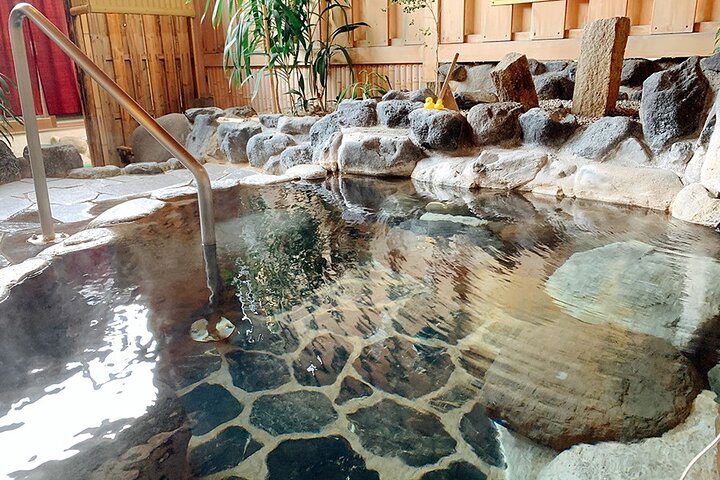
This is the one I recommend to every inked traveler who messages me. The Tattoo-Friendly Open-Air Onsen — Tokyo is a commercial rotemburo complex with a confirmed policy: tattoos of any size are welcome. No cover-up stickers needed, no awkward conversations at the counter. I visited on a Wednesday afternoon and the outdoor bath had maybe six people total. The water was 42°C, the air was cool, and the bamboo fence gave enough privacy that I forgot I was in central Tokyo.
Tattoo-Friendly Open-Air Onsen — Tokyo
Tattoo-friendly rotemburo in Tokyo with confirmed policy — no questions asked. Central location, clean facilities, and a proper outdoor bath. The indoor sauna is small but functional. Best for: tattooed travelers who want guaranteed access without hassle. Not for: anyone seeking a traditional ryokan atmosphere — this is a modern bathhous
Check Availability →
I also need to mention Thermae-Yu in Shinjuku, because it's saved me more than once. My flight landed at Narita at 9 PM one night in November 2024. By the time I reached Shinjuku it was 11:30 PM. Thermae-Yu was still open. The rooftop rotemburo at midnight, 12 floors above Kabukicho, with the Tokyo skyline lit up — 42°C water, 6°C air. A salaryman next to me fell asleep sitting upright on the underwater bench. Staff woke him gently at 12:45 AM. Thermae-Yu has a dedicated tattoo section on the website, and they enforce it consistently. It's open until 1 AM (last entry 12 AM). If you land late, this is your best bet.
For more details on Tokyo options, see my full Tokyo tattoo-friendly onsen list.
The Best Value Pick for Onsen Enthusiasts
Not everyone wants a full rotemburo experience. Sometimes you just want a clean, local sento where you can soak for an hour and not break the bank. That's where this next option shines.
Japanese Sento Culture Experience — Shinjuku
I booked the Japanese Sento Culture Experience — Shinjuku on a rainy Tuesday in June 2023. A local guide met me outside the sento and walked me through the entire process — how to use the washing stations properly, the correct way to fold the tenugui towel, and which temperature bath to start with. The guide also confirmed the tattoo policy before we entered: small tattoos were fine with cover-up stickers, which they provided. I watched a first-timer from Australia make the classic mistake of putting her small towel in the bath water — the guide corrected her gently, and she laughed it off. For ¥4,500, it's the most efficient way to learn sento etiquette without making all the mistakes yourself.
Japanese Sento Culture Experience — Shinjuku
Guided sento experience in Shinjuku with a local who explains the rules. Includes cover-up stickers for small tattoos. Best for: first-time onsen visitors who want to learn etiquette without embarrassment. Not for: experienced onsen-goers who already know the routine — you'll find the guide's explanations basic.
Check Availability →
One thing I wish I'd known earlier: many sento in Tokyo are tattoo-friendly even when the ryokan in the same neighborhood aren't. The big commercial complexes like Thermae-Yu and Spa LaQua in Tokyo Dome City have clear policies online. The smaller family-run sento are a mixed bag — some are fine with tattoos, some aren't. The only way to know is to check their website or call ahead. If the website is Japanese-only, email them in English — most reply within 48 hours.
Worth the Splurge: Asakusa Sento Experience — Traditional Tokyo Bathhouse
Sometimes you want the real thing — a sento that's been running for decades, with old-school tile work and a neighborhood feel. Asakusa has a few of these, and they're worth seeking out.
Asakusa Sento Experience — Traditional Tokyo Bathhouse
I visited this sento on a Sunday morning in March, during cherry blossom season. The bathhouse is small — maybe 15 people capacity in the men's bath — with a high ceiling and a painted mural of Mount Fuji on the wall. The water was 43°C, borderline too hot, but the locals seemed to love it. An elderly man next to me sat in the bath for a full 20 minutes without moving, steam rising from his shoulders. I lasted 12 minutes before I had to get out and sit on the bench. The sento has a small rest area with a vending machine that sells milk in glass bottles — ¥150 for a bottle of coffee milk, which I drank while watching the neighborhood cats sun themselves on the rooftop.
The tattoo policy here is case-by-case. I saw a young woman with a small flower tattoo on her ankle enter without issue. The attendant at the counter didn't even glance at it. But I've heard reports from other travelers that larger tattoos — full sleeves or chest pieces — were questioned. If you have large tattoos, call ahead or book the Asakusa Sento Experience which includes a guide who can advocate for you at the counter.
Asakusa Sento Experience — Traditional Tokyo Bathhouse
Classic sento in Asakusa with a mural and local atmosphere. Small, authentic, and affordable at around ¥500 entry. Best for: budget travelers and sento culture enthusiasts who want the real neighborhood experience. Not for: anyone with large tattoos who wants guaranteed entry — policies are case-by-cas
Check Availability →
For a more detailed comparison of Tokyo's tattoo-friendly options, read my tattoo-friendly onsen Tokyo comparison.
What I Wish I'd Known Before I Went
I've made every mistake you can make in an onsen — washed my hair at the wrong faucet, nearly walked into the wrong gender area, stayed in too long and had to lie on the bench like a beached seal. Here's what I wish someone had told me before my first tattooed visit.
Tattoo Cover-Up Stickers Work — But Not Everywhere
Skin-colored tattoo cover-up patches are sold at most drugstores in Japan (¥800-¥1,200 for a pack of 10). They work for small tattoos at many sento and onsen, but not all. Some traditional ryokan with shared baths will still refuse entry even with cover-ups — their policy is zero visible tattoos, period. I've found that commercial onsen complexes (Thermae-Yu, Spa LaQua, Oedo Onsen Monogatari) are more flexible than family-run ryokan. If you have large tattoos, skip the cover-ups and book a private onsen (kashikiri-buro) instead — you'll avoid the issue entirely.
Private Onsen Are the Workaround
If you have large tattoos and don't want to gamble on policies, rent a private onsen. Many ryokan offer kashikiri-buro — a small outdoor bath you can book for 45-60 minutes, usually ¥2,000-¥5,000 extra. No one sees your tattoos, no questions asked. I've used this option at least 20 times, and it's never failed me. For a list of ryokan with private baths, see my guide to ryokan with private onsen.
Bring Cash — Especially in Rural Areas
Many rural onsen don't accept credit cards. I learned this the hard way in a small town near Beppu, where the only ATM was a 20-minute walk from the onsen. The entry fee was ¥400, and I had to borrow coins from a local woman who saw me panicking at the entrance. Most onsen also have coin lockers that require ¥100 coins — bring a handful of chang
Winter Rotemburo Is Worth the Cold
In Nagano last February, I sat in a rotemburo at 42°C while snow fell around me. The air was -5°C. Snowflakes melted on my shoulders. Steam rose from the water into the freezing air. A group of monkeys watched from the rocks nearby, steam rising from their red faces — the same bath culture, just a different species. That contrast — freezing air on your face, hot water on your body — is the peak onsen experience. Don't skip winter onsen because you're worried about the cold. The walk between the indoor changing room and the outdoor bath is the only uncomfortable part. Bring a warm hat.
Don't Book the Earliest Dinner Slot at a Ryokan
This is a mistake I made at a ryokan near Gora in autumn. I booked the 6 PM kaiseki dinner slot, which meant I had to rush through my evening bath to make it to the dining room on time. The kaiseki was incredible — twelve tiny dishes arriving one by one on lacquer trays, flavors I couldn't identify but loved — but I wished I'd booked the 7:30 PM slot instead, so I could soak for an hour before dinner without rushing. The lesson: kaiseki is half the value of a ryokan stay. Don't rush it.
Beppu's Steam Vents Are Free Public Cooking Stations
In the Kannawa district of Beppu, a local woman handed me a wire basket with two eggs and a sweet potato. She pointed at a steam vent in the pavement, hissing at 100°C. I lowered the basket in, waited 12 minutes, and pulled out perfectly cooked onsen tamago. The sweet potato took 30 minutes. She charged me ¥300 and told me the vent has been used this way since the Edo period. Beppu's steam vents are free public cooking stations. Ask a local how long to cook things — times vary by vent.
The Snow Monkeys Don't Care About Your Camera
At Jigokudani Monkey Park in Nagano, the snow monkeys ignore humans completely. They've been bathing in the onsen longer than we've been visiting. I went in January and booked the 9 AM entry — the monkeys were in the water the longest during the cold morning. Steam rose from their red faces as they sat motionless in the 40°C water, occasionally scratching an arm or picking at a companion's fur. It's surreal watching wild animals enjoy the same bath culture. No cameras are allowed in the bathing area, but the viewing platform gives you a clear view. Book the early slot — by 11 AM, the monkeys are done and wandering back into the forest.
Bad Weather Is an Excuse to Spend More Time in the Baths
I arrived in Hakone at 10 AM on a Tuesday in heavy June rain. The outdoor sights were pointless — visibility was maybe 50 metres from the ropeway. I went to a small sento near Gora station instead. Only three other people. The rain on the tin roof was loud and steady. I spent two hours there and it was better than any clear-day ropeway ride. Bad weather at Hakone is an excuse to spend more time in the baths. The outdoor sights will still be there tomorrow.
Frequently Asked Questions
Are tattoos allowed in Japanese onsen?
It depends on the establishment. Many traditional ryokan with shared baths restrict visible tattoos, but larger commercial onsen complexes (Thermae-Yu, Spa LaQua) and some sento in Tokyo are tattoo-friendly. Always check the website or call ahead. Private onsen (kashikiri-buro) sidestep the issue entirely.
Can I use tattoo cover-up stickers at onsen in Japan?
Skin-colored cover-up patches work for small tattoos at many sento and commercial onsen, but not all. Some traditional ryokan will still refuse entry even with cover-ups. For large tattoos, book a private onsen instead.
What are the best tattoo-friendly onsen in Tokyo?
Thermae-Yu in Shinjuku (open until 1 AM, dedicated tattoo section), the Tattoo-Friendly Open-Air Onsen in central Tokyo (confirmed policy, no questions asked), and Jakotsuyu in Asakusa (small tattoos fine, case-by-case for larger ones).
How do I find tattoo-friendly onsen in rural Japan?
Check the onsen's website or call ahead. Many rural onsen don't have English websites, so email them in English — most reply within 48 hours. Private onsen (kashikiri-buro) are the safest bet in rural areas where policies may be stricter.
Is it okay to wear swimwear in a Japanese onsen?
No. Bathing in onsen and sento is always naked. Swimwear is considered unhygienic because the fabric can carry soap residue and bacteria into the shared water. The small towel (tenugui) is for washing and drying, not for modesty.
What should I do if I feel dizzy in an onsen?
Get out immediately and sit or lie down in the cool-down area. Drink water — onsen can dehydrate you quickly. Don't stay in the bath for more than 15-20 minutes at a time, and avoid onsen after heavy drinking, which increases the risk of fainting.
Frequently Asked Questions
Are tattoos allowed in Japanese onsen?
It depends on the establishment. Many traditional ryokan with shared baths restrict visible tattoos, but larger commercial onsen complexes (Thermae-Yu, Spa LaQua) and some sento in Tokyo are tattoo-friendly. Always check the website or call ahead. Private onsen (kashikiri-buro) sidestep the issue entirely.
Can I use tattoo cover-up stickers at onsen in Japan?
Skin-colored cover-up patches work for small tattoos at many sento and commercial onsen, but not all. Some traditional ryokan will still refuse entry even with cover-ups. For large tattoos, book a private onsen instead.
What are the best tattoo-friendly onsen in Tokyo?
Thermae-Yu in Shinjuku (open until 1 AM, dedicated tattoo section), the Tattoo-Friendly Open-Air Onsen in central Tokyo (confirmed policy, no questions asked), and Jakotsuyu in Asakusa (small tattoos fine, case-by-case for larger ones).
How do I find tattoo-friendly onsen in rural Japan?
Check the onsen's website or call ahead. Many rural onsen don't have English websites, so email them in English — most reply within 48 hours. Private onsen (kashikiri-buro) are the safest bet in rural areas where policies may be stricter.
Is it okay to wear swimwear in a Japanese onsen?
No. Bathing in onsen and sento is always naked. Swimwear is considered unhygienic because the fabric can carry soap residue and bacteria into the shared water. The small towel (tenugui) is for washing and drying, not for modesty.
What should I do if I feel dizzy in an onsen?
Get out immediately and sit or lie down in the cool-down area. Drink water — onsen can dehydrate you quickly. Don't stay in the bath for more than 15-20 minutes at a time, and avoid onsen after heavy drinking, which increases the risk of fainting.
Explore More
Related comparisons and guides:
Book Hakone Onsen →