A Personal Note
The Natural vs the Convenient
I've lived in Kyoto for most of my twelve years in Japan, and I go to Osaka about once a month — for food, for meetings, for the energy of a city that never seems to slow down. When friends visit and ask where to bathe in Kansai, the conversation always starts with a clarification: Osaka does not have natural onsen water in the city centre. This is not a flaw — it's just a fact. And once you know it, planning becomes much simpler.
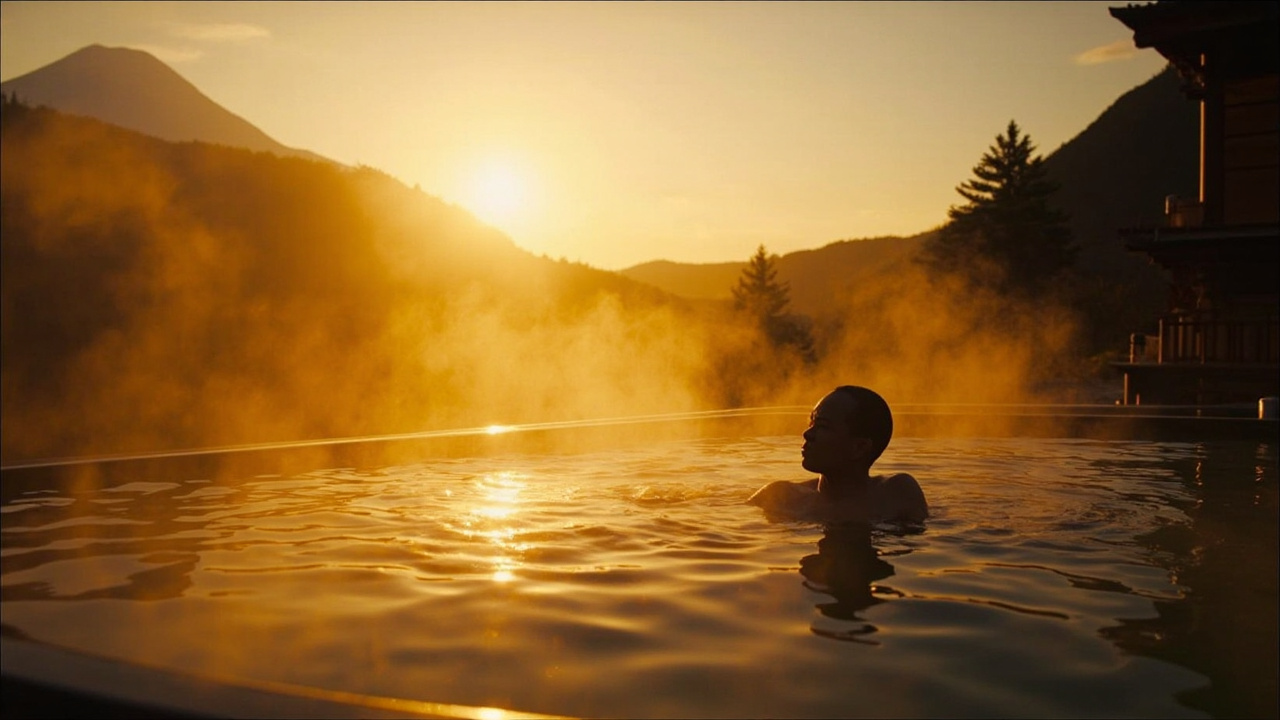
Kyoto's onsen are not in the city centre either. They're in the mountains — Arashiyama to the west, Kurama to the north, Ohara further still. Getting to them takes effort. The Kurama hike from Kibune is a ninety-minute walk through cedar forest in thin mountain air. The rotemburo at the end is forty-two degrees of sulphur-tinged water set against a dark stone slope. Nobody hands you that experience — you earn it. That's Kyoto onsen.
Osaka's baths are different. They're accessible, affordable, and completely unpretentious. A sento in Osaka's residential neighbourhoods costs ¥500 and you'll be in the water five minutes after arriving. Spa World near Shin-Imamiya is open all night with themed floors and waterslides. It's not natural onsen water — it's heated, filtered tap water — but nobody at Spa World at 1am cares about that. The question isn't which city has better baths. It's what kind of bathing experience you want.
Side by Side
The Core Difference
Kyoto has real onsen — natural geothermal water in mountain settings. Osaka has sento culture — heated bathhouses, themed complexes, and 24-hour access. The choice depends on whether you want authenticity or convenience.
| Factor | Kyoto | Osaka |
|---|---|---|
| Natural onsen water | Yes — Arashiyama and Kurama areas have genuine geothermal springs | No — central Osaka has no natural onsen. All baths use heated tap water (sento-style) |
| Getting there from city centre | 30-90 min to reach onsen areas (Arashiyama 30 min, Kurama 60 min by train, Ohara 60 min by bus) | 5-20 min — sento and Spa World are inside the city |
| Cost level | ¥800-1,500 for public sento/bath entry. Ryokan ¥15,000-45,000/night | ¥400-1,200 for sento entry. Spa World ¥1,200-2,000. Hotels from ¥8,000/night |
| Setting | Mountain valleys, bamboo groves, cedar forest, riverside locations | Urban neighbourhoods, themed complexes, rooftop baths in business hotels |
| Bath type | Mountain onsen, riverside sento, ryokan rotemburo, forest-view outdoor baths | Neighbourhood sento, super sento (large complexes), Spa World themed zones |
| Signature experience | Kurama mountain hike + rotemburo. Arashiyama bamboo grove + riverside sento | Spa World at midnight. Neighbourhood sento with decades-old tilework |
| Tattoo-friendly venues | Tourist-oriented venues in Arashiyama generally accepting. Kurama Onsen — call ahead | Osaka sento are generally more relaxed than Kyoto. Spa World accepts tattoos in most zones |
| Hours | Most close by 9-10pm. Kurama Onsen day-use until 8pm (last entry 7pm) | Many sento open until 11pm-midnight. Spa World open 24 hours |
| Best combined with | Temple visits, bamboo grove walks, kaiseki dining, Nara day trip | Dotonbori food crawl, Osaka Castle, Universal Studios, Kobe day trip |
Compare in Detail
Kyoto vs Osaka: Full Bathing Comparisone.
Factor Kyoto Osaka Getting between cities 30 min by JR Special Rapid from Osaka Station to Kyoto Station. Both cities are easily combined in one trip Same — the cities are 30 min apart. You can base in either and visit the other for bathing Getting to baths from station Arashiyama: 10 min walk from Arashiyama Station. Kurama: onsen is beside Kurama Station (end of Eizan line). Ohara: 20 min bus from Kyoto Station Sento are walkable from any station. Spa World: 1 min from Dobutsuen-mae Station, 3 min from Shin-Imamiya Onsen water quality Arashiyama: sulphur-tinged (faint smell). Kurama: simple sodium-chloride spring, clear, hot (42°C). Legitimate natural hot spring Heated tap water only — no geothermal mineral content. The water is clean and well-maintained but has no spring source Outdoor rotemburo Kurama Onsen has a forest-view rotemburo. Some Arashiyama ryokan have private outdoor baths. Limited but high-quality Spa World has rooftop open-air baths (heated). Some super sento have outdoor sections. Good variety in the city Ryokan availability Arashiyama has several quality ryokan with onsen. Kurama has one ryokan with outdoor bath. Ohara has countryside ryokan Almost none — Osaka has business hotels and a few ryokan-style accommodations, but onsen ryokan culture is absent from the city Best season Autumn (October-November) for temple foliage + onsen. Spring (March-April) for cherry blossoms. Summer is hot but less crowded Year-round. Winter sento are especially cosy. Summer sento provide relief from Osaka's humidity. Spa World is climate-controlled Peak crowding Cherry blossom season (late March-early April) and autumn foliage (November) — book ryokan 4-6 weeks ahead Weekend evenings at popular sento. Spa World queues on Saturday nights. Weekday mornings are quiet everywhere Food and après-bath Arashiyama has riverside restaurants and tea houses. Kurama has a few small eateries near the station. Post-bath kaiseki at ryokan Dotonbori is 15 minutes from Spa World — the best post-bath food scene in Japan. Every neighbourhood sento has a nearby izakaya Language barrier Arashiyama venues increasingly bilingual. Kurama is Japanese-only — bring a phrase card or go with someone who speaks Japanese Most sento have minimal English. Spa World has English signage and multi-language floor maps
| Factor | Kyoto | Osaka |
|---|---|---|
| Getting between cities | 30 min by JR Special Rapid from Osaka Station to Kyoto Station. Both cities are easily combined in one trip | Same — the cities are 30 min apart. You can base in either and visit the other for bathing |
| Getting to baths from station | Arashiyama: 10 min walk from Arashiyama Station. Kurama: onsen is beside Kurama Station (end of Eizan line). Ohara: 20 min bus from Kyoto Station | Sento are walkable from any station. Spa World: 1 min from Dobutsuen-mae Station, 3 min from Shin-Imamiya |
| Onsen water quality | Arashiyama: sulphur-tinged (faint smell). Kurama: simple sodium-chloride spring, clear, hot (42°C). Legitimate natural hot spring | Heated tap water only — no geothermal mineral content. The water is clean and well-maintained but has no spring source |
| Outdoor rotemburo | Kurama Onsen has a forest-view rotemburo. Some Arashiyama ryokan have private outdoor baths. Limited but high-quality | Spa World has rooftop open-air baths (heated). Some super sento have outdoor sections. Good variety in the city |
| Ryokan availability | Arashiyama has several quality ryokan with onsen. Kurama has one ryokan with outdoor bath. Ohara has countryside ryokan | Almost none — Osaka has business hotels and a few ryokan-style accommodations, but onsen ryokan culture is absent from the city |
| Best season | Autumn (October-November) for temple foliage + onsen. Spring (March-April) for cherry blossoms. Summer is hot but less crowded | Year-round. Winter sento are especially cosy. Summer sento provide relief from Osaka's humidity. Spa World is climate-controlled |
| Peak crowding | Cherry blossom season (late March-early April) and autumn foliage (November) — book ryokan 4-6 weeks ahead | Weekend evenings at popular sento. Spa World queues on Saturday nights. Weekday mornings are quiet everywhere |
| Food and après-bath | Arashiyama has riverside restaurants and tea houses. Kurama has a few small eateries near the station. Post-bath kaiseki at ryokan | Dotonbori is 15 minutes from Spa World — the best post-bath food scene in Japan. Every neighbourhood sento has a nearby izakaya |
| Language barrier | Arashiyama venues increasingly bilingual. Kurama is Japanese-only — bring a phrase card or go with someone who speaks Japanese | Most sento have minimal English. Spa World has English signage and multi-language floor maps |
The Verdict
So Which Should You Choose?
Choose Kyoto onsen if:
- You want genuine natural hot spring water
- You're willing to travel 30-90 minutes to reach the baths
- A mountain hike followed by an outdoor rotemburo sounds like a good day
- You want the ryokan experience with kaiseki dinner and futon sleeping
- The bamboo grove + riverside onsen combination appeals to you
- You don't mind that most baths close by 9pm
Choose Osaka baths if:
- You want a bath that's easy — 5 minutes from your hotel, no planning needed
- You're in Osaka for food, nightlife, and want a bath as a relaxing add-on, not the main event
- You want to bathe late — Spa World is open 24 hours, many sento until midnight
- You're on a tight budget (¥400-1,200 per bath)
- You don't care about the water source — you just want to soak in hot water
- You're travelling with a group that includes people who might not want a full onsen excursion
The honest answer
Kyoto has the real onsen — natural hot spring water in mountain settings — but you have to work for them. Osaka has no natural onsen but has Japan's most accessible, affordable, and late-night bath culture. If you have one day in Kansai and onsen is important to you, go to Arashiyama from Kyoto. If you're spending a week in Osaka and want to bathe every evening after dinner, the city's sento and Spa World will serve you well. The best approach: stay in Osaka for food and nightlife, take one day trip to Kyoto's Arashiyama for a real onsen experience.
Honest Guidance
Who Should Skip This Comparisone.
Not every traveler fits into the Kyoto-or-Osaka framing. If any of these apply to you, you may want a different approach to Kansai bathing.
- If you want the best natural onsen in Kansai, period — Neither Kyoto nor Osaka is the top choice. Arima Onsen in Kobe (30 min from Osaka) is one of Japan's three oldest onsen towns with genuine hot spring water and a historic bathhouse district. Skip the Kyoto-Osaka comparison entirely and go to Arima.
- If you have limited mobility — Kurama Onsen requires a 90-minute forest hike (moderate difficulty, uneven terrain). Arashiyama is flatter and more accessible. Osaka's Spa World has lifts and accessible baths. Choose based on physical requirements, not just destination.
- If you're only interested in the most photogenic experience — Arashiyama's bamboo grove combined with a riverside onsen is the most photogenic Kansai bathing experience. Osaka's baths are experiential, not photographic. Kurama is atmospheric but harder to capture in photos.
- If you're traveling with children — Spa World in Osaka has a kids' zone with waterslides and shallow pools. Kyoto's mountain onsen are quiet, adult-oriented spaces. For families, Osaka is the clear winner.
- If you want the ryokan experience specifically — Kyoto's Arashiyama area has several ryokan with onsen and kaiseki dining. Osaka has almost no ryokan culture. If sleeping on a futon and eating a multi-course dinner is part of what you want, stay in Kyoto.
Start Planning
Browse Each Destinatione.
Kyoto Onsen
90+ onsen experiences — Arashiyama, Kurama, temple-adjacent mountain baths.
Explore Kyoto →
Osaka Baths
Sento culture, Spa World 24-hour complex, neighbourhood bathhouses, rooftop baths.
Explore Osaka →
Kyoto Onsen
90+ onsen experiences — Arashiyama, Kurama, temple-adjacent mountain baths.
Explore Kyoto →Osaka Baths
Sento culture, Spa World 24-hour complex, neighbourhood bathhouses, rooftop baths.
Explore Osaka →Decision Framework
Which Is Right For You — The Detailed Breakdown
The table above gives you the facts. This section gives you the framework to decide based on how you travel.
Your Relationship With Bathing
This is the honest question most guides skip. Do you want to make bathing the focus of a day, or do you want it as a relaxing add-on? Kyoto's mountain onsen demand commitment — the Kurama hike alone is half a day. Osaka's baths ask nothing of you — walk in, pay ¥500, soak, leave. If you want a Japanese bathing experience but don't want to structure your trip around it, Osaka wins. If bathing is one of the reasons you're coming to Japan in the first place, Kyoto's onsen are worth the effort.
Group Dynamics
If you're travelling with people who have different levels of interest in onsen, base yourself in Osaka. The non-bathers can explore Dotonbori or Osaka Castle while you visit a sento. Then everyone meets for dinner. In Kyoto, a Kurama onsen trip takes everyone for the full day — hikers and non-hikers alike. Arashiyama is better for mixed groups because the bamboo grove and temples give non-bathers something to do while you soak.
When You're Bathing
Kyoto's onsen close by 9-10pm. If you want an evening bath after a full day of sightseeing, you're racing the clock. Osaka's sento stay open until 11pm or midnight, and Spa World is 24 hours. For travellers who sightsee during the day and bathe at night, Osaka's schedule works better. For travellers who want a morning or afternoon onsen as the main activity, Kyoto's schedule is fine.
The Water Source
This matters more to some people than others. Kyoto's Arashiyama and Kurama onsen use natural hot spring water from geothermal sources — it rises from the ground at 38-42°C with mineral content that varies by location. Osaka's baths all use heated municipal tap water. The experience is similar — hot water, relaxation, the ritual — but if knowing the water came from underground matters to you, go to Kyoto. If hot water is hot water to you, Osaka will serve you perfectly well.
Trip Structure
If Kansai is part of a larger Japan trip (Tokyo → Kyoto → Osaka → Hiroshima), you'll likely spend 2-3 nights in Kyoto and 2-3 nights in Osaka. In that structure: do your onsen in Kyoto (day trip to Arashiyama or Kurama) and use Osaka's sento for evening relaxation. The two cities complement each other. You don't have to pick one — use both for different purposes.
Questions
Kyoto vs Osaka Onsen — FAQ
No — central Osaka does not have natural onsen water. All bathhouses in central Osaka use heated tap water (sento-style). Osaka's themed bath complexes like Spa World also use heated water, not geothermal spring water. For natural onsen in the Kansai region, you need to go to Kyoto's mountain areas (Arashiyama, Kurama) or further to Arima Onsen in Kobe.
For a half-day onsen experience: Arashiyama. You can visit the bamboo grove, soak at a riverside sento, and be back in central Kyoto in 4 hours. For a full-day experience: Kurama. The hike from Kibune through cedar forest takes 90 minutes, the rotemburo at Kurama Onsen is set against the mountain slope, and the whole experience feels like a proper escape. Arashiyama is easier. Kurama is more rewarding.
Spa World is a themed bath complex, not a natural onsen. It has themed floors (European zone, Asian zone) with different bath styles, water slides, and 24-hour operation. It's fun and convenient — especially late at night when other baths are closed — but it's not a traditional onsen experience. If you're in Osaka and want a bath, it's your best option. If you want an authentic onsen experience, go to Arashiyama or Kurama from Kyoto instead.
Yes — Osaka and Kyoto are only 30 minutes apart by train. You can stay in Osaka and do a day trip to Arashiyama or Kurama onsen in Kyoto. Many visitors base themselves in one city and explore the other. Osaka's bathhouses are good for evening relaxation after sightseeing; Kyoto's onsen are better as dedicated half-day or full-day experiences.
Osaka sento (public bathhouses) are the cheapest at ¥400-1,200 per entry. These are basic neighbourhood bathhouses with no natural onsen water. Kyoto's Arashiyama riverside sento range from ¥800-1,500. For a genuine onsen experience under ¥2,000, the public bath at Kurama Onsen is the best value — natural hot spring water in a mountain setting.
Yes — most Kyoto onsen and sento close between 9-10pm, with last entry typically 30-60 minutes before closing. Kurama Onsen's day-use bath closes at 8pm (last entry 7pm). In Osaka, neighbourhood sento often stay open until 11pm-midnight, and Spa World is open 24 hours. If you're an evening bather, Osaka's schedule is much more accommodating.
If the ryokan experience — futon sleeping, kaiseki dinner, yukata, private or shared rotemburo — is a priority, stay at a ryokan in Kyoto's Arashiyama area. It costs ¥15,000-45,000/night but includes dinner and breakfast. If you want to bathe every evening without spending that much, stay at a business hotel in Osaka (¥8,000-12,000/night) and visit a different sento each night for ¥400-1,200. The Osaka approach gives you more variety and flexibility.
Yes — the difference is mineral content and source. Kyoto's Arashiyama and Kurama onsen water comes from underground geothermal sources and contains dissolved minerals (sulphur, sodium, calcium) that affect how the water feels on your skin. Osaka's sento water is heated municipal tap water — clean but mineral-free. After bathing in Kurama's sulphur-tinged water, your skin feels noticeably different — softer, less dry — compared to a standard heated bath. Whether this matters enough to travel 60-90 minutes is a personal decision.
Explore More
Related comparisons and guides:
Emi Kato
Japanese onsen specialist · 60+ onsen visited · 12 years in Japan
Last updated: June 2026
Written by Emi Kato — Japan travel and onsen specialist; based in Kyoto. Twelve years documenting Japan's hot spring culture for international visitors. Last reviewed June 2026.