Ginzan Onsen
Ginzan Onsen: The Taisho-Era Hot Spring Town in Yamagata
>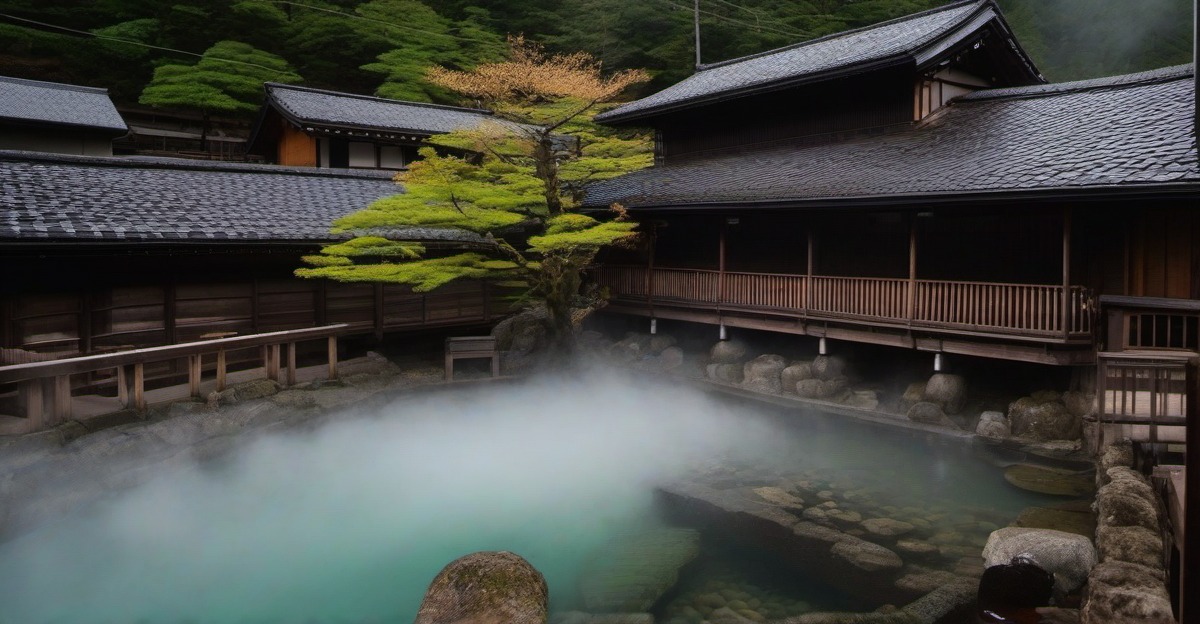
A preserved Taisho-era town in the mountains of northern Yamagata, where wooden ryokan line both banks of the Ginzan River and snow makes the gas lamps glow at dusk.
We earn a commission when you book through our Viator links, at no extra cost to you.
Why Ginzan works
Ginzan Onsen is one of the most photographed onsen towns in Japan, and the reason is architectural. The town centre is a preserved Taisho-era streetscape, with three- and four-storey wooden ryokan on both banks of the Ginzan River, gas lamps lighting the bridge at dusk, and the surrounding hills dropping snow straight down the slopes in winter. The whole town reads as a working set for a period drama, except the inns are genuine and the bath water is real.
This is not the place to come for a variety of spring types or a state-of-the-art spa. Ginzan is for travelers who care about setting, atmosphere, and the experience of staying in a building that has been doing the same thing since 1925. The town has one main street. It has one river. It has about twenty ryokan. After dark, it has nothing happening at all except people walking to the bath, and that is the point.
The Taisho-era townscape
A silver mine operated here from the 1600s until the 1920s. After the mine closed, the workforce stayed and the town pivoted to hot spring tourism. The wooden inns along the river were built mostly in the Taisho and early Showa eras (1912 to 1930), and the town has been officially preserved as a landscape district since 1986. Most of the central ryokan are original buildings or careful restorations.
Three landmarks anchor the visual identity:
- The gas lamps. Three-story lamp standards on the bridges and main intersections, gas-fired rather than electric. Lit only between dusk and 10pm in most seasons. The glow is what makes the photographs work.
- Shirogane bridge. The central pedestrian bridge across the Ginzan River, rebuilt in the Showa style. Most photographs of the town centre are taken from this bridge at dusk.
- The Ginzan River. A small mountain stream running down the centre of town. The ryokan outdoor pools in summer face the river. Snow stacks on the bridge railings in winter.
The bath water
Ginzan's spring is single-source and sulfur-rich. Most bath houses pipe the same volcanic water. Temperature tends to be moderate (39 to 42°C), the water is clear, and the smell is a faint sulfur. There are no mineral gimmicks. There is no radium spring or iron spring or hydrogen-carbonate spring with a separate name. The water is what it is.
This is unusual. Most onsen towns market themselves on mineral diversity. Ginzan markets itself on setting and on the consistency of the bathing experience across all six public bath houses. That consistency is part of the appeal. You are not making a decision between gold water and silver water. You are deciding which ryokan's outdoor pool you want to look at.
The six public bath houses
Six bath houses operate as public facilities, all sourcing the same sulfur spring:
- Haikara no Yu. The newest, and the most foreigner-friendly. Modern facilities, separate male and female bathing areas, tattoo policy sticker-required but flexible. Day-use entry 800 yen.
- Shiraito no Yu. The oldest, with mountain views from the outdoor pool. Day-use 600 yen.
- Yamanoito no Yu. The medium option, off the main street. Day-use 500 yen.
- Kashiwaya no Yu. Small, atmospheric, popular with locals. Day-use 500 yen. Sticker required.
- Ichinoyu. The most central, attached to a ryokan. Day-use 500 yen during the daytime.
- Fujiya Ryokan no Yu. The smallest, female-friendly during certain hours. Closed to day-use some seasons.
Most visitors stay at a ryokan and use the in-house pool. The public bath houses are supplementary. Most ryokan lock their pools after 9pm to overnight guests only, when the day visitors have gone and the bath feels like a private pool.
Day trip vs overnight
Ginzan is in the mountains of northern Yamagata, about 4 hours from Tokyo by direct bus and 3.5 hours via Yamagata Shinkansen plus local bus. The day trip version is exhausting and I do not recommend it. An overnight stay at one of the central ryokan is the only way to see Ginzan in the right state.
Two nights is better. The first evening is for arrival, dinner, and bath. The second morning is for the pre-dawn outdoor bath and a slow breakfast, before the day visitors arrive. Three or more nights and the town starts to feel like a regular place, not a destination. The sweet spot is two.
Ryokan at the budget end run about 12,000 to 18,000 yen per person with two meals. Mid-range is 18,000 to 32,000 yen. Top-end (Fujiya, Ginzanso, Notoya Ryokan) runs 35,000 to 60,000 yen, with private outdoor baths in some room categories.
Ryokan picks at three price points
- Ginzanso. Mid-range, central location on the river. Modern rooms but traditional kaiseki dinner, outdoor pool on the river side. Tattoo-friendly across pools. From 22,000 yen per person with two meals.
- Fujiya Ryokan. Historic, the most central. Mixed indoor and outdoor pools facing the river. Kaiseki dinner at the older inn, kaiseki that punches above its price. From 28,000 yen per person with two meals.
- Notoya Ryokan. High-end, off the main strip but close. Private outdoor bath in some rooms, kaiseki dinner drawing on local Yamagata beef. From 38,000 yen per person.
Best season for a visit
January to mid-March is the headline season. The town has snow on the rooftops, snow on the streets, snow on the bridge railings, and the gas lamps glow against the snow at dusk. The visual is the most photographed winter scene in Tohoku. The photograph everyone tries to take is the river at 5pm in mid-February, with snow falling and gas lamps lit, and one of the ryokan outdoor pools visible behind a wooden lattice. Most successful photographs are taken from the Shirogane bridge.
Summer (June to August) is the underrated season. The town is greener, the river is louder, and the outdoor pools are warm by contrast with the mountain air. Day-use bathers are rare in summer, so the public baths feel private. Most photographers consider January to March the only season, but for travelers who care more about the bath than the photograph, summer Ginzan is a more relaxed version of the same place.
Spring and autumn are shoulder seasons, with cherry blossoms in late April and foliage in late October. Both are beautiful but with less hotel availability than the winter peak.
Tattoo policy summary
Ginzan is stricter than Hakone or Beppu, comparable to Arima. The public bath houses enforce sticker policies strictly. The front desk at Haikara no Yu and the larger ryokan sell sticker sheets. Most ryokan in town accept tattoos in their private baths. If you have a sleeve or large back piece, plan to use only ryokan private baths and confirm by phone before booking.
Getting there, step by step
- From Tokyo, direct overnight highway bus from Shinjuku to Ginzan Onsen Station, about 9 hours overnight, runs select dates in winter.
- From Tokyo, JR Joetsu Shinkansen to Yamagata (3 hours), transfer to JR Ou Main Line to Oishida (35 minutes), then local bus to Ginzan Onsen (35 minutes).
- From Sendai, direct highway bus to Ginzan, about 2 hours.
- From Yamagata City, highway bus to Ginzan, about 90 minutes.
Book a Ginzan Onsen experience
Viator lists overnight Ginzan ryokan packages with guaranteed private bath access, plus combined Sendai or Yamagata city tours with Ginzan as the hot spring stop. The listings below are bookable year-round, with off-season rates April through November.
Book a Ginzan Onsen Overnight Ryokan →
Frequently asked
How do I get to Ginzan?
Yamagata Shinkansen to Oishida, then a 35-minute local bus up the mountain. Or direct bus from Sendai (2 hours) or Yamagata City (90 minutes).
Why does it look like a movie set?
The central ryokan date to the Taisho era (1912 to 1926). The town centre is officially preserved as a landscape district.
Day trip?
Technically yes, but exhausting. Stay overnight. Two nights is the sweet spot.
Summer visit?
Yes, underrated. The town is greener, the outdoor pools are comfortable, and the bath houses feel private. Most photographers prefer January to March.
Tattoos?
Public bath houses require stickers. Most ryokan accept tattoos in private baths. Bring stickers as backup.
Related: Hakone onsen · Kusatsu onsen · Nyuto onsen · All destinations
By Emi Kato, onsen specialist. Twelve years documenting Japan's hot springs from a base in Kyoto, with regular winter trips to Tohoku. The Ginzan recommendations reflect stays in February and June. The architectural preservation is genuine, most central ryokan are authentic Taisho-era buildings or careful restorations.
Discover Beppu and Yufuin Nature and Onsen Trip
Start your day with a guided visit to Beppu’s famous Umi Jigoku and Oniishi Jigoku, followed by a scenic ride on the Beppu Ropeway to Mt. Tsurumi’s summit. Enjo
Check availabilityExplore More
Related guides and comparisons: